
Hunt for the Easter Sharks: A genetic analysis of shark and ray meat markets in Guatemala
Hunt for the Easter Sharks: A genetic analysis of shark and ray meat markets in Guatemala
Devanshi Kasana, Hector Daniel Martinez, Julio Sánchez-Jiménez, Elisa Areano, Ana Hacohen-Domené, Rachel T. Graham, Demian D. Chapman
Fisheries Research 283 (2025) 107300. Available online 16 February 2025. doi:10.1016/j.fishres.2025.107300
Abstract
Guatemala, situated in Central America along the eastern Pacific Ocean and the western Caribbean Sea, is a major regional consumer of elasmobranch (shark and ray) meat during the Roman Catholic Lenten season. Elasmobranch meat is supplied by a combination of domestic fisheries and imports. Despite being a component of economic and nutritional security for local communities, fisheries and trade lack monitoring and management. Limited information on species-specific landings and fisheries and trade supply chains is further complicated by Guatemala’s bicoastal geography, which necessitates the separation of landings by geographic origin for robust stock assessments and targeted management interventions. This study employs molecular techniques to identify the species and, for the main species in trade, ocean basin provenance, occurring in meat samples collected from domestic markets across Guatemala in 2022 as well as historical samples from 2016 and 2017. Successful genetic testing of 370 meat samples identified 19 shark and ray species in the trade, including many threatened species, as well as a significant proportion of species now listed under the Convention on International Trade in Endangered Species of Wild Fauna and Flora (CITES). It also revealed substantial (22 %) mislabelling of teleost fish as elasmobranchs. Pacific coast markets and the largest inland market (Guatemala City, the largest urban centre) predominantly relied on domestic and imported landings from the Pacific coast, while Guatemala City also had inputs from domestic and likely imported landings from the Atlantic coast. One Atlantic coastal market sampled was exclusively supplied from that basin. Some imports of Pacific Ocean species are reported to CITES but there is limited national management of pelagic and coastal shark and rays landings on the Pacific coast, which needs to be rectified given the importance of these species and populations to elasmobranch meat consumption in Guatemala. Better enforcement of CITES is required to ensure sustainable imports of Atlantic Ocean sharks, while recent efforts to manage Atlantic domestic landings needs to be continued and likely expanded to promote sustainability.
Introduction
Increasing market demand for shark and ray (“elasmobranch”) commodities in conjunction with trade growth continues to mount pressure on their populations worldwide (Jabado et al., 2015; Davidson et al., 2016). Expanding markets create trade networks that enable products to move “boat to plate”, i.e., from the point of capture to the consumer, through supply chains (Mundy and Sant, 2015). While the global trade in elasmobranch fins has been researched extensively (Clarke et al., 2007; Fields et al., 2018; Carde˜nosa et al., 2020, 2022), markets for elasmobranch meat on global, regional, and domestic scales remain poorly understood. However, trade in elasmobranch meat continues to surpass finsboth in terms of volume and valuecontributing to economic and nutritional security for a range of stakeholders in many coastal areas of the world (Glaus et al., 2019; Niedermüller et al., 2021; Seidu et al., 2022). Global elasmobranch meat trade networks are complex, evolving and geographically dispersed, incorporating new and less centralized supply chains with multiple domestic and international actors (Dent and Clarke, 2015). Transparency and traceability throughout the supply chains can help ensure that trade is legal, protected species remain off the market and consumers can make informed consumption choices (Fox et al., 2018; Niedermüller et al., 2021; Hasan et al., 2023). Due to data paucity, countries often consolidate elasmobranch catch data into aggregated categories (such as sharks nei) when reporting to the Food and Agriculture Organization of the United Nations (FAO). Similarly, trade data gets consolidated under aggregated commodity categories, combing various product types and species (Musick and Musick, 2011; Dent and Clarke, 2015; Barone and Friedman, 2021; Fowler et al., 2021).This approach presents evident challenges in establishing traceability and distinguishing between fin and meat markets. Furthermore, as an increasing number of shark species are listed under CITES Appendix II, necessitating more transparency, there is a growing imperative among Parties to establish reliable species-specific catch and trade baselines. Most coastal nations border one ocean and elasmobranch landings are thus drawn from species and population(s) from that ocean. Some Central American nations have both a Pacific and Atlantic coast, which means fisheries landings can include Atlantic Ocean species, Pacific Ocean species, and Atlantic or Pacific Ocean individuals of cosmopolitan species. National level species-specific landings and trade information is growing in the region, in part due to listing of many elasmobranchs on CITES. However, bicoastal Central American nations have a need to further separate species-specific landings to Atlantic Ocean or Pacific Ocean populations to properly assess and manage their fisheries. Guatemala exemplifies this scenario. Here, religious practices and culinary traditions intensify demand for salt-preserved and fresh elasmobranch meat during the Roman Catholic Lenten season (Clementi et al., 2020; Sabbagh and Hickey, 2020; Quinlan et al., 2021). The nation meets this demand for elasmobranch meat with a combination of imports in addition to their domestic artisanal elasmobranch fisheries operating both in the Pacific Ocean and the Caribbean Sea (Hacohen-Domen´e et al., 2020; Castillo and Morales, 2021; S´anchez et al., 2023). The domestic market for elasmobranch meat in Guatemala therefore is a combination of bicoastal domestic fisheries in addition to international imports (Hacohen-Domen´e et al., 2020; Sabbagh and Hickey, 2020; Castillo and Morales, 2021). Despite significant consumption, elasmobranch meat trade remains largely unmonitored and unregulated in Guatemala with very little information on species and quantities landed and traded. Vulnerability to fishing is species-dependent, underscoring the need for species-specific catch and trade data for successful management interventions and conservation (Abercrombie et al., 2005; Clarke et al., 2006; Davidson et al., 2016; Dulvy et al., 2017). Additionally, “DNA zip coding” (Fields et al., 2020; Carde˜nosa et al., 2020a, 2020b) can establish ocean basin provenance of products, allowing bicoastal nations to identify critical trade routes and tailor management decision-making for each exploited population. This information is crucial for resource managers aiming to establish legal, traceable, and sustainable trade practices. Silky sharks (Carcharhinus falciformis), which are known to dominate landings on both the Atlantic and Pacific coasts (Ixquiac Cabrera et al., 2009; Hacohen-Domen´e et al., 2020), are a strong example to illustrate this approach due to their cosmopolitan distribution. To date, elasmobranch meat trade has been characterized using a combination of survey methods (e.g. market, fisher knowledge, traders) (Jabado et al., 2015; Karnad et al., 2020; Haque et al., 2021) and genetic approaches to identify shark species and products that are morphologically difficult to identify (Liu et al., 2013; Almer´on-Souza et al., 2018; Wainwright et al., 2018; Pazartzi et al., 2019). Understanding domestic markets for elasmobranchs in Guatemala has implications for the management of domestic fisheries, the implementation of and compliance with international trade regulations such as CITES, and the conservation of species supplying this demand. Using molecular techniques, the aims of this study were to (1) establish a species-specific baseline for shark and ray meat in domestic trade; (2) evaluate the conservation status of species in the markets; and (3) assess the geographic origin of a key species (silky shark, Carcharhinus falciformis) and relative contribution of Atlantic and Pacific Ocean basins respectively.
Materials and methods
Sample collection and DNA extraction
Domestic fish markets selling shark meat in Guatemala were identified based on extensive preliminary work and recommendations from our collaborators at Fundaci´on Mundo Azul, who conducted groundwork to pinpoint markets of significant scale. Six key cities with major fish markets that received shark meat from landing sites and other local markets from both the Atlantic and the Pacific were selected (Fig. 1). This ensured an adequate bicoastal coverage of the pool of species that are available to a domestic consumer in Guatemala. Markets were defined as point of sale and therefore, included organized markets with several shops in an area as well as independent vendors operating outside such formal arrangements. Using convenience sampling, a form of non-probability sampling to select participants (Newing et al., 2011), researchers identified and sampled all available and willing vendors selling shark meat products. The project purpose, along with anonymity and confidentiality measures, was explained to the vendors. To avoid sample redundancy and double-sampling, at each vendor we sampled products sold as elasmobranch fillets that i) could be visually differentiated from the others or, ii) were sold as different products (fresh versus salted) or, iii) were specifically identified by the vendor as being distinct (i.e. differently labelled). A total of 145 samples of fresh and salted sharks and rays were collected from fish markets in Guatemala in April 2022. We also obtained samples collected non-probabilistically from various additional markets and seafood gathering centers in Guatemala, provided by collaborators at Fundaci´on Mundo Azul. These included 146 samples from 2016 and 116 samples from 2017. All DNA samples were procured and transported for laboratory analyses under appropriate research and export permits from Consejo Nacional de ´Areas Protegidas (CONAP) Guatemala #I_DRO-002–2021, Belize Fisheries Department and approved animal care protocol exemption #IACUC-21–071. Samples were preserved in 95 % ethanol and then kept in −20˚C until further analysis. Using 0.010 – 0.025 g of tissue, genomic DNA was extracted from each sample. This was done using the Qiagen DNAeasy tissue kit and following the manufacturer’s instruction for animal tissue protocol (QIAGEN, Valencia, CA, USA).
Following extraction, a 600–650 bp region of the mitochondrial cytochrome c oxidase subunit I gene (COI) was amplified using universal primers FishCoxI F (5’TCWACCAACCACAAGAYATYGGCAC3’) and FishCoxI R (5’TARACTTCWGGGTGRCCRAAGAATCA3’), modified from Ward et al. (2005). Each 25 µL Polymerase Chain Reaction (PCR) included 0.5 μL of extracted DNA, 12.5 μL of GoTaq Hot Start Green Master Mix (Promega, Madison, WI, USA), 10.5 μL of DNase/RNase-free water (Fisher Scientific), and 0.75 μL of each forward and reverse primers from a 10 μM stock solution. PCR was conducted with the following thermal cycling profile: an initial denaturation at 94 ◦C for 10 min. PCR products were checked for amplification on a 1.5 % agarose gel, purified using ExoSAP-IT (ThermoFisher Scientific, Waltham, MA, USA) and sequenced in both directions using the BigDye Terminator v3.1 Cycle Sequencing Kit (ThermoFisher Scientific). Sequences were cleaned with an ethanol precipitation and run on an ABI 3730xl DNA Analyzer (Applied Biosystems). All forward and reverse sequences were reviewed, edited manually and aligned using the MUSCLE algorithm in Geneious v.3.6.1 (http://www.geneious.com). Using search algorithms, the resulting sequences were used as queries against GenBank and BOLD online databases to identify the samples to species level. Species identity was confirmed to the lowest taxon possible with a sequence similarity of at least 99 %. Batoid samples were reamplified for the mitochondrial NADH dehydrogenase subunit 2 gene (ND2) to get species-level resolution using primers MetF (5′AAGCTYTTGGGCCCATACC3’) and TrpR (5’AGCTTTGAAGGCTTTTGGTYT3’) (Vella et al., 2017). Each 25 µL PCR included 2.0 μL of extracted DNA, 12.5 μL of GoTaq Hot Start Green Master Mix (Promega, Madison, WI, USA), 8.5 μL of DNase/RNase-free water (Fisher Scientific), and 1.0 μL of each forward and reverse primers from a 10 μM stock solution. PCR had the following thermal cycling profile: an initial denaturation at 95 ◦C for 15 min. Subsequent steps to establish species identity were identical to the protocol outlined above, except using the MetF forward primer and the TrpR reverse primer for sequencing. These sequences were also identified using BLAST and species identity was confirmed to the lowest taxon possible with a sequence similarity of at least 99 %.
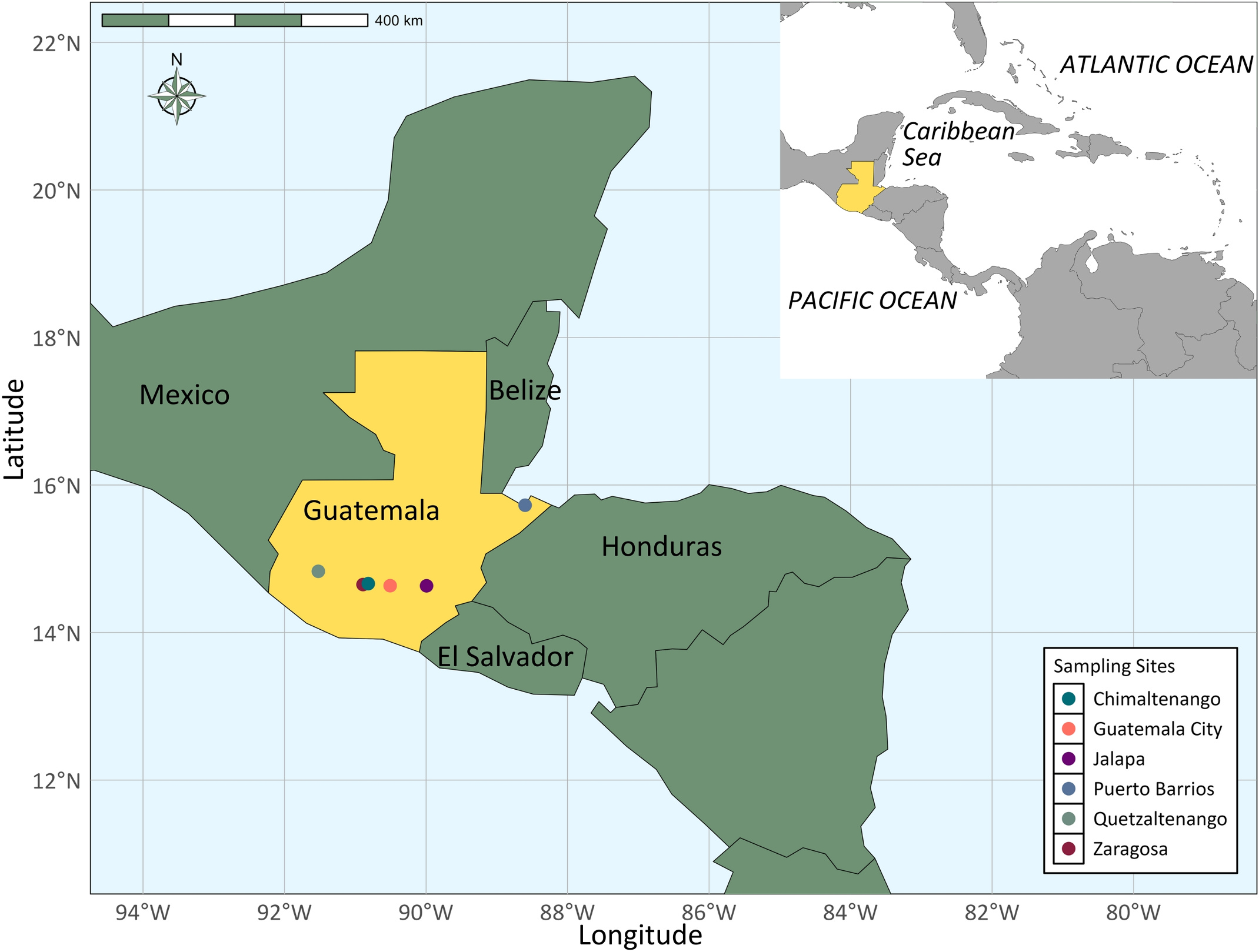
Fig. 1. a: Study area in Guatemala (Sampling locations: Puerto Barrios, Jalapa, Guatemala City, Chimaltenango, Zaragoza, Quetzaltenango); Fig. 1b: fresh and dried shark meat being sold in Guatemala fish markets for Lent season in April 2022.
Region of origin identification
To determine the provenance of the identified products two approaches were used. First, species were attributed to the Atlantic Ocean or Pacific Ocean based on their known geographic range and distribution- ‘ATL’ for species found exclusively in the Atlantic Ocean basin, ‘PAC’ for species encountered exclusively in the Pacific Ocean basin and ‘PAC/ATL’ for species that have a circumglobal distribution and could be found in both the Atlantic and Pacific Ocean basins. Geographic occurrence data for the species were derived from the most recent assessments published in the International Union for Conservation of Nature (IUCN) Red List of Threatened Species. The second approach employed population genetic analyses to establish ocean basin provenance to the most encountered species in the markets from our samplingCarcharhinus falciformis (silky shark). A total of 40 silky shark meat samples collected in 2017 and 2022 (current study) were selected and used for sequencing ~1069 bp fragment of the mitochondrial Control Region (CR) using external primers CR-F6 (5′AAGCGTCGACCTTGTAAGTC3′) and DAS-R2 (5′GCTGAA ACTTGCATGTGTAA3′) (Clarke et al., 2015). Additionally, to sequence through the entire mtCR and circumvent the issue of degraded genomic DNA, a species-specific internal forward primer silkyCR_F2 (5′GATCAAACCTGACATTTGATTATGG3′) was used in conjunction with DAS-R2 to amplify a short amplicon (~250–350 bp) within the mtCR (Carde˜nosa et al., 2020). Each 25 µL PCR included 1.0 μL of extracted DNA, 12.5 μL of GoTaq Hot Start Green Master Mix (Promega, Madison, WI, USA), 8.5 μL of DNase/RNase-free water (Fisher Scientific), and 1.5 μL of each forward and reverse primers from a 10 μM stock solution. PCRs had the following thermal cycling profile: an initial denaturation ◦C for 5 min. PCR products were checked for amplification on a 1.5 % agarose gel, purified using ExoSAP-IT (ThermoFisher Scientific, Waltham, MA, USA) and subsequently sequenced as described above using the primers used for PCR. All forward and reverse sequences were reviewed, edited manually and aligned using the MUSCLE algorithm in Geneious v.3.6.1 (http ://www.geneious.com). All market-derived silky shark individuals were attributed a haplotype using MacClade (Maddison and Maddison, 2000). Previously described haplotypes by (Clarke et al., 2015) were downloaded from NCBI (Genbank Accession numbers KM267565–KM267626) and aligned using the MUSCLE algorithm in Geneious v.3.6.1.Using all distinct silky shark haplotypes, from Clarke et al. (2015) and this study, a statistical parsimony network was constructed using the software TCS (Clement et al., 2000), applying a 95 % confidence interval criterion to determine plausible haplotype links. Relationships between haplotypes and their geographic sampling locations were assessed based on the network structure. Market-derived silky shark sequences from Guatemalan fish markets were assigned to either the Atlantic or Indo-Pacific clade depending on their position within the network. A mixed-stock analysis (MSA) was then conducted to estimate the contribution of each source population (Atlantic and Indo-Pacific) to the shark meat found in Guatemala fish markets. Referencing the protocol from Carde˜nosa et al. (2020), haplotype frequencies from Clarke et al. (2015) and the frequencies of those haplotypes in the Guatemala shark meat samples were analysed with the R-package mixstock (Bolker, 2012) using Markov Chain Monte Carlo (MCMC) estimation with 100,000 iterations following a burn-in of 50,000. The Gelman and Rubin criterion was used to assess convergence (Gelman et al., 2014)
Results
Species composition
Of the 407 meat samples processed (n = 146, 116 and 145 for 2016, 2017 and 2022 respectively), 352 samples were identified to the species level (n = 121, 97 and 134 respectively), 18 samples were identified to genus level (n = 5, 9, 4 respectively) and 37 samples did not amplify (n = 20, 10, 7 respectively). COI and ND2 barcode sequences obtained varied in length between ~600–650 bp and ~400–1000 bp respectively. Sequences were not deposited on GenBank because it is circular reasoning to identify the species using this tool and then add it to the database without another independent means of species confirmation. Sequences are available upon request from the lead author. Overall, our study reported 19 species of sharks and rays spanning seven families in Guatemala markets, in addition to several species of teleosts sold as elasmobranch meat. Within the 2022 sampling, both product forms – fresh and salted elasmobranch meat were accessible across vendors in Guatemala. A total of 18 species were identified from the sampled meat products, this included nine species of sharks, six species of rays and three species of teleosts. The number of specimens by species ranged from one to 34. The most commonly encountered elasmobranch species was Carcharhinus falciformis (silky shark) (25 %) followed by Alopias pelagicus (pelagic thresher shark) (12 %), Hypanus longus (longtail stingray) (5 %) Carcharhinus perezi (Caribbean reef shark) (5 %) and Ginglymostoma cirratum (Atlantic nurse shark) (5 %) (Table 1). In 31 cases (22 %), incongruency was observed between product sold and the species identified (i.e., mislabelling of teleost meat as an elasmobranch species). This included Coryphaena hippurus (common dolphinfish), Istiophorus platypterus (IndoPacific sailfish) and Makaira nigricans (blue marlin) sold as elasmobranch meat. Approximately 75 % of all samples consisted of species listed in a threatened category by the IUCN Red List of Threatened Species. Among the elasmobranch species identified, 3 % are Critically Endangered (CR), 36 % are Endangered (EN), 45 % are Vulnerable (VU), 6 % are Near Threatened (NT) and 4 % are Least Concern (LC) (Fig. 2). Geographically, markets sampled on the Pacific coast reported higher frequencies of threatened species. 100 % of samples from Quetzaltenango, 91 % of samples from Jalapa and 79 % of samples species from Chimaltenango are listed under a Red List threatened category (Fig. 3a). Nine species encountered in the markets are currently listed under Appendix II of CITES (pelagic thresher shark, silky shark, Caribbean reef shark, Carcharhinus limbatus (blacktip shark), Rhizoprionodon terranovae
Table 1 Species composition of elasmobranchs from key fish markets in Guatemala in 2022. Total number (n) and relative contribution (%) of species recorded in the study with their IUCN Red List status and CITES listing, if any (CR: Critically Endangered; EN: Endangered; VU: Vulnerable; NT: Near Threatened; LC: Least Concern; DD: Data Deficient).
| No. | Family | Species | Common name | n | Relative contribution (%) | Region of origin | IUCN status | CITES listing |
|---|---|---|---|---|---|---|---|---|
| Sharks | ||||||||
| 1 | Alopiidae | Alopias pelagicus | Pelagic thresher shark | 17 | 12.32 | PAC | EN | Ap. II |
| 2 | Carcharhinidae | Carcharhinus falciformis | Silky shark | 34 | 24.64 | PAC/ATL | VU | Ap. II |
| 3 | Carcharhinidae | Carcharhinus limbatus | Blacktip shark | 3 | 2.17 | PAC/ATL | VU | Ap. II |
| 4 | Carcharhinidae | Carcharhinus perezi | Caribbean reef shark | 7 | 5.07 | ATL | EN | Ap. II |
| 5 | Carcharhinidae | Carcharhinus spp. | Requiem sharks | 1 | 0.72 | Ap. II | ||
| 6 | Carcharhinidae | Rhizoprionodon terraenovae | Atlantic sharpnose shark | 4 | 2.90 | ATL | LC | Ap. II |
| 7 | Carcharhinidae | Galeocerdo cuvier | Tiger shark | 2 | 1.45 | PAC/ATL | NT | |
| 8 | Ginglymostomatidae | Ginglymostoma cirratum | Atlantic nurse shark | 7 | 5.07 | ATL | VU | |
| 9 | Sphyrnidae | Sphyrna lewini | Scalloped hammerhead | 3 | 2.17 | PAC/ATL | CR | Ap. II |
| 10 | Sphyrnidae | Sphyrna tiburo | Bonnethead shark | 2 | 1.45 | PAC/ATL | EN | Ap. II |
| Rays | ||||||||
| 11 | Potamotrygonidae | Styracura schmardae | Atlantic chupare | 4 | 2.90 | ATL | EN | |
| 12 | Dasyatidae | Hypanus americanus | Southern stingray | 1 | 0.72 | ATL | NT | |
| 13 | Dasyatidae | Hypanus guttatus | Longnose stingray | 3 | 2.17 | ATL | NT | |
| 14 | Dasyatidae | Hypanus longus | Longtail stingray | 7 | 5.07 | PAC | VU | |
| 15 | Dasyatidae | Hypanus spp. | Stingrays | 3 | 2.17 | |||
| 16 | Mobulidae | Mobula mobular | Spinetail devil ray | 2 | 1.45 | PAC/ATL | EN | Ap. II |
| 17 | Mobulidae | Mobula thurstoni | Bentfin devil ray | 7 | 5.07 | PAC/ATL | EN | Ap. II |
| Other fish | ||||||||
| 18 | Coryphaenidae | Coryphaena hippurus | Common dolphinfish | 20 | 14.49 | PAC/ATL | LC | |
| 19 | Istiophoridae | Istiophorus platypterus | Indo-Pacific sailfish | 8 | 5.80 | PAC/ATL | VU | |
| 20 | Istiophoridae | Makaira nigricans | Blue marlin | 3 | 2.17 | PAC/ATL | VU | |
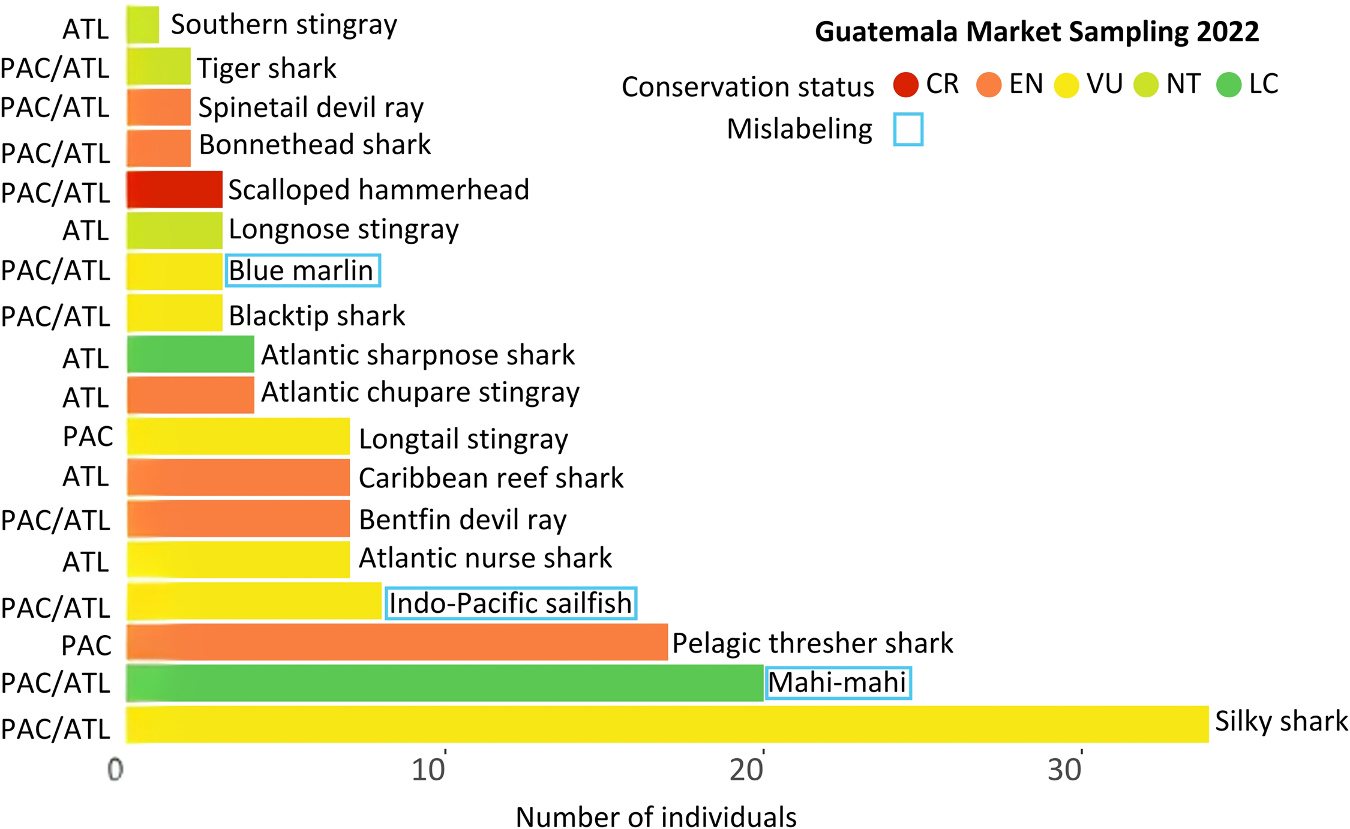
Fig. 2. Graphical depiction of the relative proportion of species in key fish markets in Guatemala, colours indicating IUCN Red List status and region of origin denoted by ‘ATL’ for exclusively Atlantic Ocean species, ‘PAC’ for exclusively Pacific Ocean species and ‘PAC/ATL’ for circumglobally distributed species found both in Atlantic or Pacific Oceans.
(Atlantic sharpnose shark), Sphyrna lewini (scalloped hammerhead), Sphyrna tiburo (bonnethead shark), Mobula thurstoni (bentfin devil ray), Mobula mobular (spinetail devil ray)). The proportion of CITES-listed species in the markets over time has increased from one in 2016 to ten with the most current listings of elasmobranch species. The 2017 samples were sourced from a combination of markets and seafood gathering centres on the Pacific and the Atlantic coast of Guatemala, as well as Guatemala City. The most frequently encountered species was silky shark (17 %), longtail stingray (11 %), and pelagic thresher shark (10 %). A total of 15 elasmobranch species were recorded however, collectively, the frequency of individuals belonging to the family Dasyatidae was the highest (including longtail stingray, Hypanus americanus (southern stingray) and Hypanus guttatus (longnose stingray)). Fifteen other teleost species were recorded, most notably IndoPacific sailfish, blue marlin, Xiphias gladius (swordfish) and individuals belonging to the family Sciaenidae (croakers) (Supplementary 1). Lastly, samples from 2016 collected exclusively from markets in Guatemala City were composed of 15 species of elasmobranchs with the most frequently encountered species being silky shark (19 %) followed by pelagic thresher shark (10 %) and longtail stingray (10 %). The presence of scalloped hammerhead (CR) and great hammerhead (EN) was notable although in relatively low numbers (Supplementary 1).
Provenance of Guatemala market-derived samples
A 1065–1067 bp fragment of the mtCR was successfully reconstructed for all 40 silky shark individuals. The sequences resolved 66 total haplotypes including haplotypes from Clarke et al. (2015) defined by 35 polymorphic sites (Supplementary 2). The frequency of each haplotype in the various regions is shown in Supplementary 3. The statistical parsimony network derived from the combined mtCR haplotypes revealed two highly differentiated lineages separated by strong phylogeographic patterning (Fig. 4). Barring the two novel haplotypes in the Atlantic clade, all the analysed silky shark meat samples from the fish markets in Guatemala fell within the Indo-Pacific clade. Of the 40 analysed silky shark meat samples, four were assigned to the Atlantic clade and 36 to the Indo-Pacific clade. Notably, all Atlantic clade samples were sourced from Puerto Barrios on the Caribbean coast. In total, four novel haplotypes were identified in the market-derived samples: two in the Atlantic clade and two in the Indo-Pacific clade. Because 30 market-derived samples exhibited haplotypes that were common within the Indo-Pacific clade but have also been infrequently reported from silky sharks caught in the Atlantic (Clarke et al., 2015), their likely population-of-origin was assessed using MSA. Fig. 5a demonstrates the shared haplotypes from Clarke et al. (2015) between the Atlantic clade, the Indo-Pacific clade and the market-derived samples. MSA results estimated a contribution of 1.95 % (97.5 % CI: 0.00, 8.90) and 98.08 % (97.5 % CI: 91.08, 99.99) of the Atlantic and Indo-Pacific populations respectively (Fig. 5b). All parameters converged based on the Gelman and Rubin criterion (<1.2). Linking the results for silky shark populations of origin with known geographic ranges of other reported species in the market, Guatemala fish markets were comprised of 24 % exclusively Atlantic Ocean species (such as Caribbean reef shark, Atlantic nurse shark, longnose stingray etc.), 35 % exclusively Pacific Ocean species (such as pelagic thresher shark, longtail stingray) and 41 % species that have shared distributions between ocean basins (such as Galeocerdo cuvier (tiger shark), bentfin devil ray, scalloped hammerhead). There was a clear demarcation between markets on the Caribbean coast with Puerto Barrios reporting 87 % exclusively Atlantic Ocean species of which 100 % silky sharks belonged to the Atlantic clade; and those on the Pacific coast such as Chimaltenango reporting 58 % exclusively Pacific Ocean species including 50 % Indo-Pacific silky sharks. In markets further inland such as Guatemala City and Jalapa, Pacific Ocean species continue to dominate the market indicating a relatively larger contribution to the Guatemala shark meat markets collectively (Fig. 3b).
Discussion
Domestic trade of shark meat in Guatemala
Trade data can provide meaningful information to complement available fisheries data furthering our understanding of consumption within the supply chain. This additional perspective offers insights into the commercialization of various species, thereby influencing considerations for effective species management and conservation strategies. This study is the first nationwide investigation into domestic trade and consumption of elasmobranch meat in Guatemala. It revealed the presence of 18 species of sharks and rays in key fish markets in Guatemala in 2022, representing 35 % of all elasmobranch species reported nationally. The species list assembled using genetic barcoding concurs with the species lists derived from landings data from the Atlantic and Pacific coasts of Guatemala, suggesting a strong domestic fisheries input of elasmobranch meat into the Guatemala market (Ixquiac Cabrera et al., 2009, 2010; Hacohen-Domen´e et al., 2020; Castillo and Morales, 2021; S´anchez et al., 2023). Thirteen threatened species (defined as CR, EN, or VU under IUCN Red List categories) were recorded in the domestic markets in Guatemala in 2022, with higher frequencies of threatened species from markets on the Pacific coast (100 % of reported species in Quetzaltenango and 71 % in Chimaltenango), including pelagic thresher shark, silky shark, bentfin devil ray and longtail stingray. In comparison, 62 % of the species in the market on the Atlantic coast (Puerto Barrios) were threatened, including scalloped hammerhead (CR) and Styracura schmardae (Atlantic chupare)(EN). More elasmobranch species are listed on CITES at present than when sampling commenced in this study (2016). If the species composition of 2022 holds true today, then over half (58 %) of the products we sampled would have been from Appendix II listed species. With such a large proportion of species consumed in Guatemala now listed, we would expect most meat imports to be documented by CITES in the future. Thirty-one meat products (22 % of sampling effort) were mislabelled as elasmobranch when they were teleosts. Instances of replacing lowvalue species, such as croaker and pangasius, with high-demand, highvalue species like grouper have been previously reported (Fundaci´on Mundo Azul, unpublished data). Although the commercial harvest of sailfish is restricted in Guatemala, our findings in the markets suggest the presence of this species, indicating a potential concealment of legally mandated catch-and-release species (Article 28 of the General Fisheries and Aquaculture Law, Decree No. 80–2002) (MAGA, 2002). Traders and consumers in Guatemala are often unaware of species in trade and solely use certain physical characteristics, such as the colour of meat, to refer to products. In the context of elasmobranchs, mislabelling can distort our understanding of the abundance of sharks and rays in the market wherein their apparent availability in the market may be misinterpreted as a sign of low risk leading to complacency in conservation efforts. Moreover, it can create a bias in public perception and attitudes hindering advocacy efforts for conservation of at-risk species. If consumers perceive sharks and rays as abundant and easily accessible, they are less likely to exercise caution when purchasing these species in the market. Addressing mislabelling in seafood supply chains is not just about preventing economic fraud; it is also important for the effective management and conservation of the species. Combating mislabelling can ensure a more transparent and sustainable market while also fostering support and awareness for the protection of vulnerable marine species.
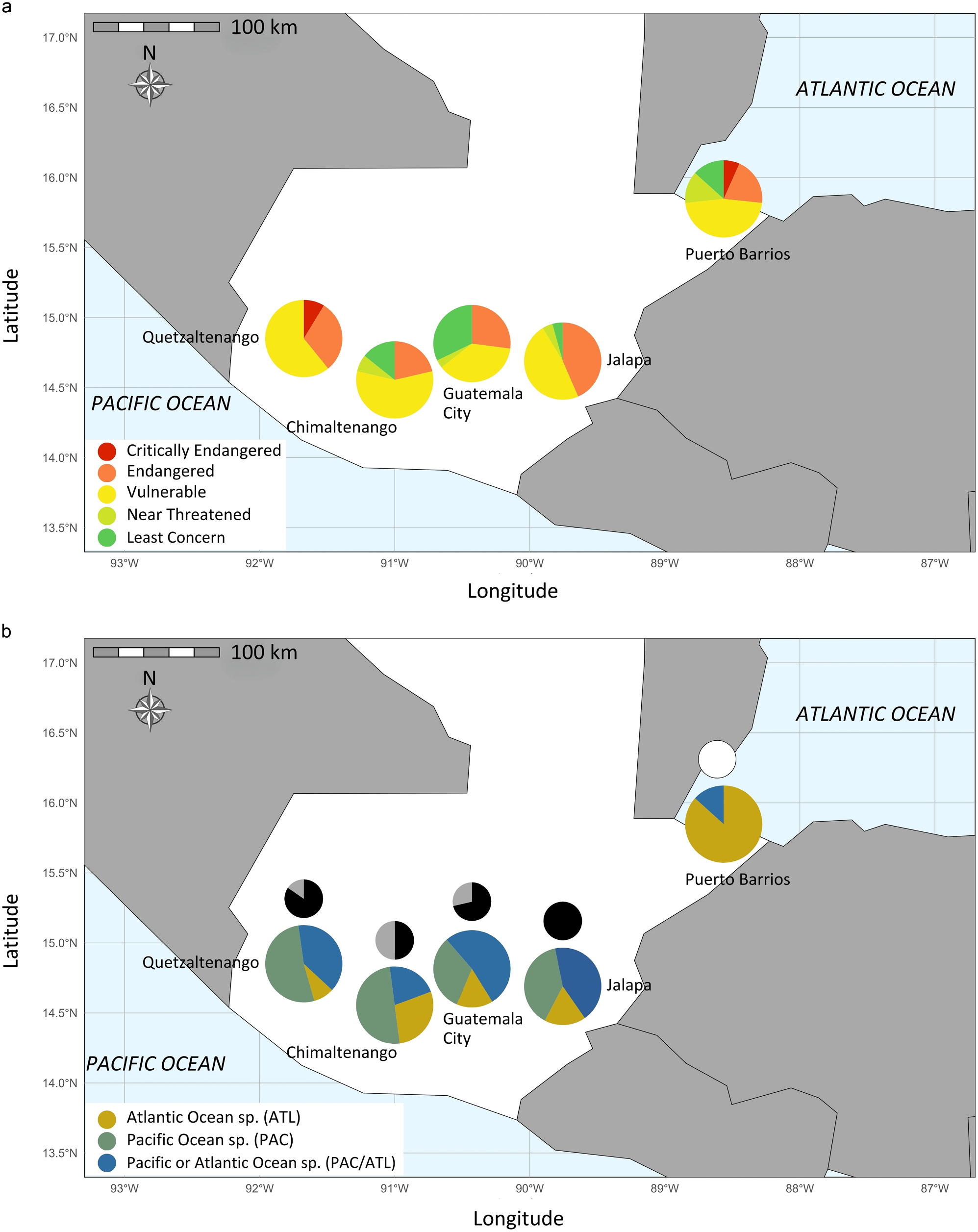
Fig. 3. a: Map of sampling sites with pie charts representing relative contribution of species based on their IUCN Red List status; Fig. 3b: Map of sampling sites with pie charts representing relative contribution of (i) exclusively Atlantic Ocean species, (ii) exclusively Pacific Ocean species, and (iii) circumglobal Atlantic or Pacific Ocean species based on their geographic distributions and population genetic analyses (silky sharks only). Smaller pie charts represent silky shark ocean basin provenance depicted separately for each market, where black = Pacific Ocean silky sharks, white = Atlantic Ocean silky sharks and grey = silky sharks of unknown origin.
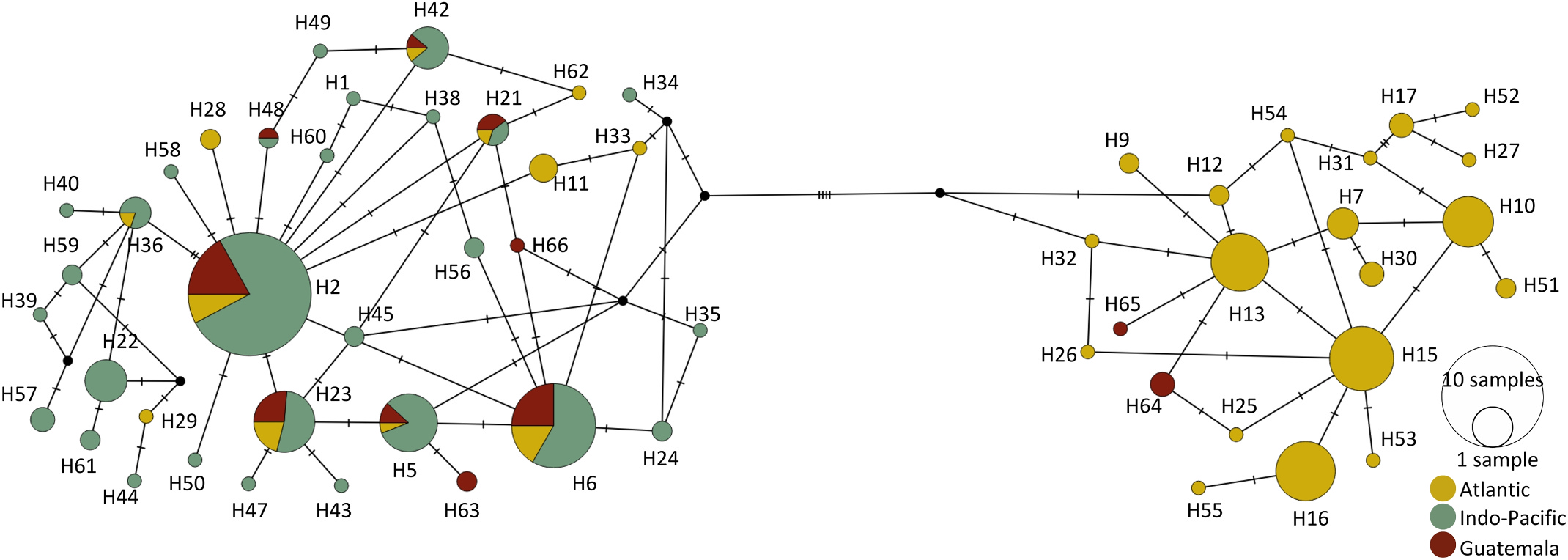
Fig. 4. Statistical parsimony network with haplotypes connected at the 95 % confidence interval. Colors represent geographic sampling locations of silky sharks (C. falciformis) haplotypes (Atlantic Ocean basin, Indo-Pacific Ocean basin, Guatemala markets). Size of each circle is proportional to the frequency of that haplotype. Small solid black circles represent hypothetical haplotypes not sampled in this study with each connecting line between haplotypes represents one mutational step.
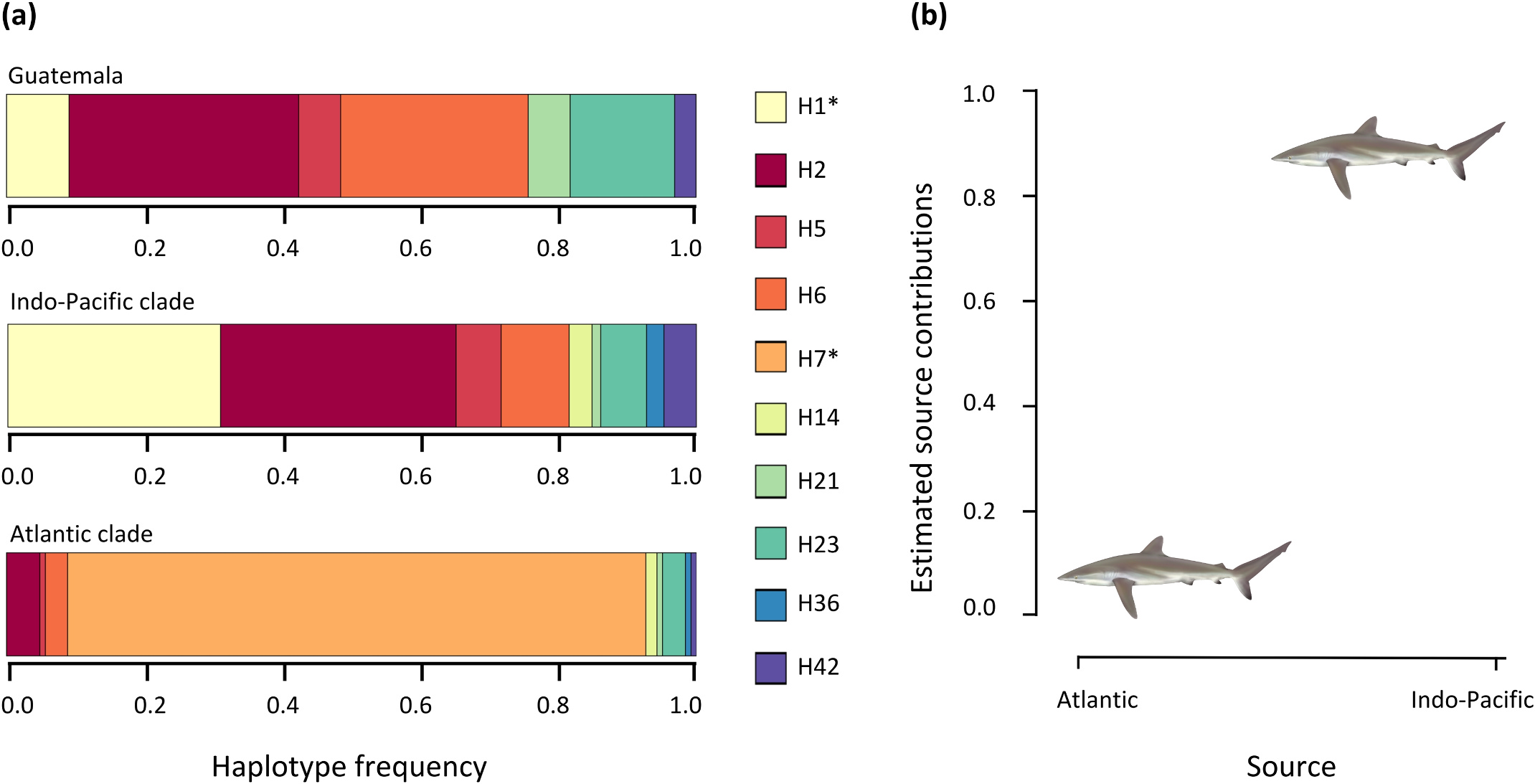
Fig. 5. a: Haplotype frequencies from Clarke et al. (2015) present in the Guatemala markets, the Indo-Pacific clade and the Atlantic clade. H1 * and H7 * represent condensed groups of haplotypes that were not shared between the Indo-Pacific and Atlantic clades, respectively; Fig. 5b: Estimated contribution of each source population to the Guatemala fish markets.
Niedermüller et al. (2021) emphasize the importance of reporting species-specific information at all stages of the supply chain. Building species-specific baselines for elasmobranch meat in the markets is a key step in refining commodity trade and tariff codes and establishing robust traceability mechanisms. Even though it is a snapshot, these baselines can be used for future monitoring and assessment to understand trends over time and space. Ultimately, these baselines will assist in determining the relative importance of consumption as a threat to species, trends in their exploitation and examining the role of fisheries and trade regulations as an additional measure for elasmobranch conservation.
Synthesis of supply chains, with implications for management
The dual reliance on domestic artisanal fisheries and international trade contributes to a complex market for elasmobranch meat in Guatemala. We present a species-specific conceptual model of the supply chains underpinning national elasmobranch meat consumption to highlight where potential management interventions could be implemented (Fig. 6). Our data suggest that the largest input of elasmobranch meat into Guatemala is from the Pacific Ocean, dominated by silky and pelagic thresher sharks and coastal rays. This trend is reflected in proportionally larger quantities of landings from the Pacific coast (Fundaci´on Mundo Azul, unpublished data). The CITES Trade Database documents substantial imports of silky shark meat (~15,000–25,000 kg per year 2019–2022) from Costa Rica, suggesting a combination of imports from this Pacific-fishing neighbour and domestic Pacific landings is responsible for the market dominance of this species. There are no reported CITES imports of pelagic thresher shark meat, which could mean that the landings of this species are all from domestic Pacific fisheries or there is some illicit import occurring. Either way, Guatemala is also a globally substantial exporter of dried fins to Hong Kong via El Salvador for both species according to CITES. Import data from Hong Kong suggests ~2000 to 8000 kg of fins annually between 2019 and 2022. Meanwhile, Guatemala’s reported export quantities range from ~3500 to 20,000 kg per year during the same period (CITES Trade Database, UNEP-WCM 2024). Meat from Pacific Ocean sharks and rays dominated all markets along the Pacific coast (such as Quetzaltenango, Chimaltenango) as well as the most important inland market (Guatemala City). Atlantic Ocean species and populations dominated the one surveyed market on the Atlantic coast (Puerto Barrios), which consisted mostly of fresh meat. Fresh meat is probably sourced mainly from the domestic fishery; indeed, there are no recorded imports of CITES listed species from Atlantic nations into Guatemala. Moreover, the Atlantic species observed generally aligns with the species composition of landing site surveys in the Guatemalan Caribbean (e.g., southern stingray, longnose stingray, Atlantic chupare, Atlantic nurse shark, scalloped hammerhead)
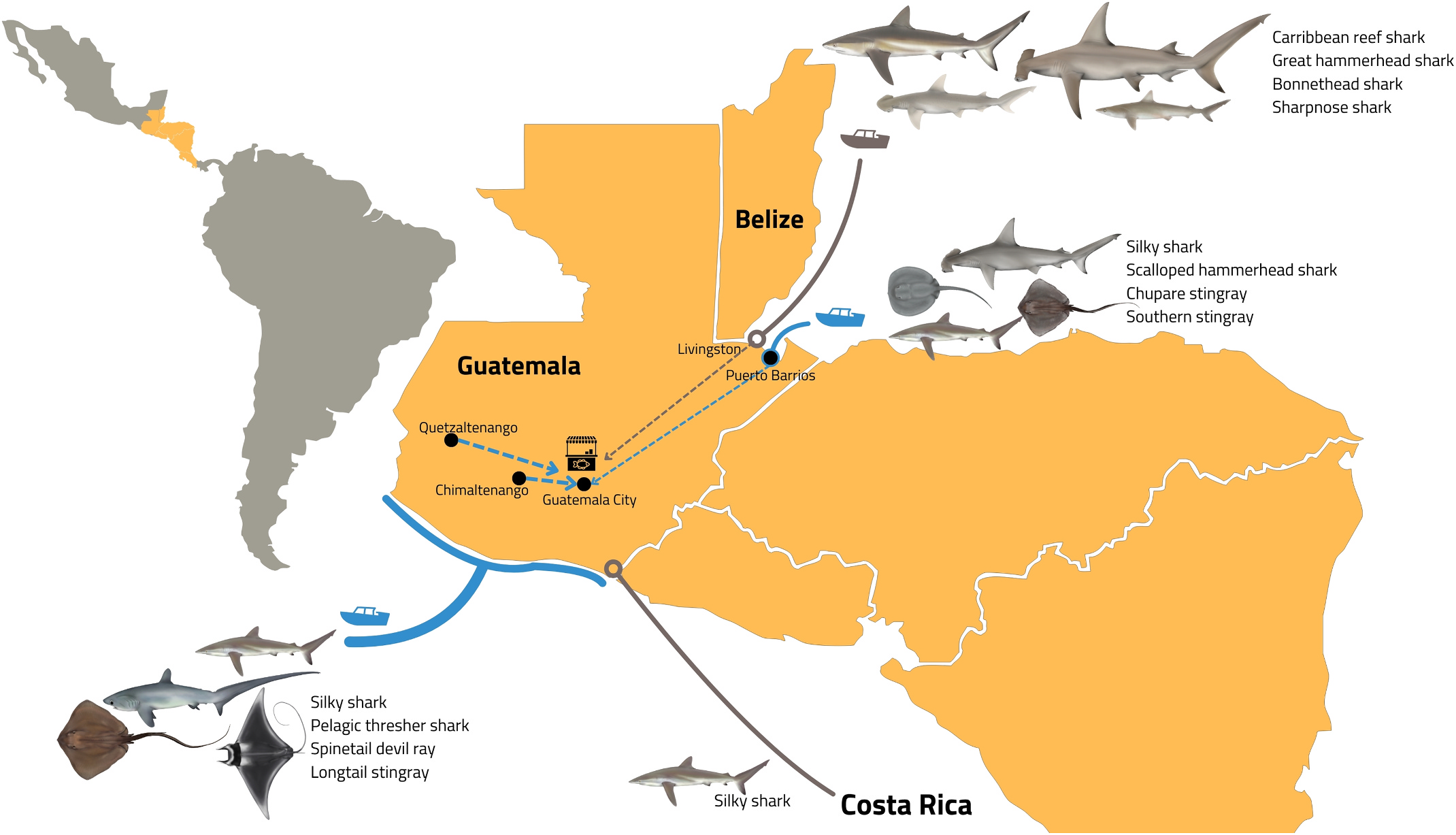
Fig. 6. Model for bicoastal inputs into Guatemala shark and ray meat markets. Thicker arrows from the Pacific Ocean indicate a higher input from the Pacific Ocean basin into Guatemala with limited national management for elasmobranchs operational on the Pacific coast. International trade (imports) from Belize and Costa Rica indicated with brown arrows highlighting the need for better enforcement of CITES. Species ocean basin provenance (from this study) and inputs from domestic fisheries (Hacohen-Domen´e et al., 2020; Castillo and Morales, 2021; S´anchez et al., 2023) versus transboundary trade from Belize (Quinlan et al. 2021) and Costa Rica (CITES trade database) depicted by species illustrations.
(Hacohen-Domen´e et al., 2020). The Caribbean reef shark, great hammerhead and bonnethead shark are rare in domestic landings (Hacohen-Domen´e et al., 2020). However, these species are important in Belize landings (Quinlan et al., 2021), which is a known Atlantic input to Guatemala through exports of salted shark meat from its domestic fishery (Graham, 2007; Quinlan et al., 2021), as well as from illegal transboundary fishing by Guatemalans in the Belize EEZ (Perez et al., 2009; Wade et al., 2019; Baremore et al., 2021). Salted meat from these species was found in Guatemala City, which suggests imported meat from Belize that is known to be boat-transported to the coastal town of Livingston in Guatemala is ultimately supplied to the larger inland urban markets (Graham, 2007; Sabbagh and Hickey, 2020). For the 2021–22 shark fishing season in Belize, the selling price of exported salted shark meat from Belize to Guatemala fluctuated between 15 and 33 Guatemalan quetzales (~ 2–4 USD/lbs) (O. Faux & H.D. Martinez, personal communication). Shark meat from Belize is exported as wet salted (Graham, 2007), incurring extra expenses for drying, packaging, and transportation before it reaches Guatemalan markets. This may explain the higher market prices for salted elasmobranch meat domestically in Guatemala, ranging from 25 to 150 Guatemalan quetzales per pound (~3–20 USD/lb), contingent upon quality (D. Kasana, personal observation, April 2022). The existing management measures for shark and ray fishing operations in Guatemala comprise a regional ban on shark finning, established by the Central American Fisheries and Aquaculture Organization (OSP-05–11) in 2011, which is unlikely to have high conservation potential because of the value of shark meat in Guatemala. There is an annual 1–3 month seasonal closure on the Atlantic coast (Acuerdo Ministerial 42–2011; Acuerdo Ministerial 43–2012; Acuerdo Ministerial 33–2013). Moreover, Guatemala implemented the National Plan of Action for Sharks, Rays and Chimaeras Guatemala (NPOAChondrichthyans Guatemala) in 2021, endorsed by the Ministry of Agriculture, Livestock, and Food, overseeing DIPESCA (Acuerdo Ministerial 280–2021) (MAGA, 2021). However, the implementation of the NPOA and the efficacy of limited management measures remains questionable. Given the prevalence of threatened species in the market, the study underscores the need for targeted management interventions and the establishment of sustainable management practices. At present, the artisanal fisheries operating from the Pacific coast of Guatemala are conducted throughout the year in a largely unregulated manner without permits from Guatemala’s Fisheries and Aquaculture Regulations Department. Elasmobranchs are incidentally caught in substantial quantities, and in contrast to the Atlantic coast, fishing communities heavily depend on elasmobranch fisheries for a significant portion of their income (Castillo and Morales, 2021). Therefore, fisheries management is needed for the threatened sharks and rays along the Pacific coast, given their dominant contribution to the domestic markets and importance for coastal livelihoods and food security. These recommendations advocate for species-specific conservation strategies for highly vulnerable species, the implementation of evidence-based fisheries management measures, and an enhanced understanding of obstacles to compliance. Additionally, it is crucial to enhance the enforcement of international trade regulations, with a specific emphasis on CITES compliance, particularly in the Atlantic region. This is especially pertinent within the context of the established trade route between Belize and Guatemala (Sabbagh and Hickey, 2020; Clementi et al., 2020; Quinlan et al.,2021), where nearly every species landed in Belize is now listed on CITES and should be documented moving forward. Effectively managing the fisheries that contribute to this trade remains a persistent challenge in Guatemala characterized by notable gaps. This study highlights the multifaceted nature of the Guatemalan shark meat markets, emphasizing a need for re-evaluating existing regulations, understanding hindrances to compliance, and facilitating evidence-based management strategies. More generally, this study highlights the usefulness of supplementing DNA barcoding of elasmobranch products with DNA “zip coding” techniques to identify important trade routes and regions of concern. It builds baselines for species in the domestic markets, sheds light on the relative contribution of the Pacific and Atlantic coasts, and highlights management priorities. Ultimately, by understanding the current state of the trade and its implications, stakeholders, policymakers, and conservationists can develop targeted interventions to promote sustainable practices for elasmobranch use in Guatemala.
Declaration of Competing Interest
The authors declare that they have no known competing financial interests or personal relationships that could have appeared to influence the work reported in this paper.
Funding and acknowledgements
This work was funded by Shark Conservation Fund, Mote Marine Laboratory and The Roe Foundation. The authors would like to thank Diego Carde˜nosa and Maria A. Herrera for guidance on data analyses as well as Fundaci´on Mundo Azul for logistical and sampling support. We would also like to thank Gabriela M. Ochoa and Alberto Paniagua from Ilili for Fig. 6.
Supplementary material
Supplementary data associated with this article can be found in the online version at doi:10.1016/j.fishres.2025.107300.
References
- Abercrombie, D.L., Clarke, S.C., Shivji, M.S., 2005. Global-scale genetic identification of hammerhead sharks: application to assessment of the international fin trade and law enforcement. Conserv. Genet. 6 (5), 775–788. https://doi.org/10.1007/s10592-0059036-2.
- Almer´on-Souza, F., Sperb, C., Castilho, C.L., Figueiredo, P.I.C.C., Gonçalves, L.T., Machado, R., Oliveira, L.R., Valiati, V.H., Fagundes, N.J.R., 2018. Molecular identification of shark meat from local markets in Southern Brazil based on DNA barcoding: Evidence for mislabeling and trade of endangered species. Front. Genet. 9 (APR), 1–12. https://doi.org/10.3389/fgene.2018.00138.
- Baremore, I.E., Graham, R.T., Witt, M.J., 2021. Fishing down the reef slope: Characteristics of the nearshore deepwater fisheries of MesoAmerica. Ocean Coast. Manag. 211, 105773. https://doi.org/10.1016/j.ocecoaman.2021.105773.
- Barone, M., Friedman, K., 2021. Better data colletction in shark fisheries learning from practice. FAO Fish. Aquac. Circ. 1227, 1–80. 〈https://www.proquest.com/scho larly-journals/better-data-collection-shark-fisheries-learning/docview/26629021 61/se-2〉.
- Bolker, B.M. (2012). Mixed stock analysis in R: Getting started with the mixstock package. Retrieved from-〈https://citeseerx.ist.psu.edu/document?repid=rep1&typ e=pdf&doi= 043730a02b148396ebd54b2f62e8f6364714b1b2〉.
- Carde˜nosa, D., Fields, A.T., Babcock, E.A., Shea, S.K.H., Feldheim, K.A., Chapman, D.D., 2020. Species composition of the largest shark fin retail-market in mainland China. Sci. Rep. 10 (1), 1–11. https://doi.org/10.1038/s41598-020-69555-1.
- Carde˜nosa, D., Fields, A.T., Babcock, E., Shea, S.K.H., Feldheim, K.A., Kraft, D.W., Hutchinson, M., Herrera, M.A., Caballero, S., Chapman, D.D., 2020b. Indo-Pacific origins of silky shark fins in major shark fin markets highlights supply chains and management bodies key for conservation. Conserv. Lett. 14 (3), 1–11. https://doi. org/10.1111/conl.12780.
- Carde˜nosa, D., Fields, A.T., Shea, S.K.H., Feldheim, K.A., Chapman, D.D., 2020a. Relative contribution to the shark fin trade of Indo-Pacific and Eastern Pacific pelagic thresher sharks. Anim. Conserv. 24 (3), 367–372. https://doi.org/10.1111/ acv.12644.
- Carde˜nosa, D., Shea, S.K., Zhang, H., Fischer, G.A., Simpfendorfer, C.A., Chapman, D.D., 2022. Two thirds of species in a global shark fin trade hub are threatened with extinction: Conservation potential of international trade regulations for coastal sharks. Conserv. Lett. 15 (5), 1–11. https://doi.org/10.1111/conl.12910.
- Castillo, C.G.A., Morales, O.S., 2021. Characterization of the artisanal elasmobranch fisheries off the pacific coast of Guatemala. Fish. Bull. 119 (1), 3–9. https://doi.org/ 10.7755/FB.119.1.2.
- Clarke, C.R., Karl, S.A., Horn, R.L., Bernard, A.M., Lea, J.S., Hazin, F.H., Prod¨ohl, P.A., Shivji, M.S., 2015. Global mitochondrial DNA phylogeography and population structure of the silky shark, Carcharhinus falciformis. Mar. Biol. 162 (5), 945–955. https://doi.org/10.1007/s00227-015-2636-6.
- Clarke, S.C., Magnussen, J.E., Abercrombie, D.L., McAllister, M.K., Shivji, M.S., 2006. Identification of shark species composition and proportion in the Hong Kong shark fin market based on molecular genetics and trade records. Conserv. Biol. 20 (1), 201–211. https://doi.org/10.1111/j.1523-1739.2005.00247.x.
- Clarke, S., Milner-Gulland, E.J., Trond, B., 2007.
- Social, economic, and regulatory drivers of the shark fin trade. Mar. Resour. Econ. 22 (3), 305–327. https://doi.org/ 10.1086/mre.22.3.42629561.
- Clement, M., Posada, D., Crandall, K.A., 2000. TCS: a computer program to estimate gene genealogies. Mol. Ecol. 9 (10), 1657–1659. https://doi.org/10.1046/j.1365294x.2000.01020.x.
- Clementi, G., Babcock, E., Valentin-Albanese, J., Bond, M., Flowers, K., Heithaus, M., Whitman, E., Zinnicq Bergmann, M., Guttridge, T., O’Shea, O., Shipley, O., Brooks, E., Kessel, S., Chapman, D., 2020. Anthropogenic pressures on reefassociated sharks in jurisdictions with and without directed shark fishing. Mar. Ecol. Prog. Ser. 661 (MAR), 175–186. https://doi.org/10.3354/meps13607.
- Davidson, L.N.K., Krawchuk, M.A., Dulvy, N.K., 2016. Why have global shark and ray landings declined: Improved management or overfishing? Fish Fish 17 (2), 438–458. https://doi.org/10.1111/faf.12119.
- Dent, F., Clarke, S., 2015. State of the global market for shark products. FAO Fish. Aquac. Tech. Pap. 590, 1–187. 〈https://www.proquest.com/scholarly-journals/state-globalmarket-shark-products/docview/1708482071/se-2〉.
- Dulvy, N.K., Simpfendorfer, C.A., Davidson, L.N.K., Fordham, S.V., Br¨autigam, A., Sant, G., Welch, D.J., 2017. Challenges and priorities in shark and ray conservation. Curr. Biol. 27 (11), R565–R572. https://doi.org/10.1016/j.cub.2017.04.038.
- Fields, A.T., Fischer, G.A., Shea, S.K.H., Zhang, H., Abercrombie, D.L., Feldheim, K.A., Babcock, E.A., Chapman, D.D., 2018. Species composition of the international shark fin trade assessed through a retail-market survey in Hong Kong. Conserv. Biol. 32 (2), 376–389. https://doi.org/10.1111/cobi.13043.
- Fields, A.T., Fischer, G.A., Shea, S.K.H., Zhang, H., Feldheim, K.A., Chapman, D.D., 2020. DNA Zip-coding: identifying the source populations supplying the international trade of a critically endangered coastal shark. Anim. Conserv. 23 (6), 670–678. https://doi.org/10.1111/acv.12585.
- Fowler, S., Br¨autigam, A., Okes, N., Sant, G., 2021.
- Conservation, fisheries, trade and management status of CITES-listed sharks. Bundesamt F. üR. Nat. (BfN) 607, 1–76. https://doi.org/10.19217/skr607.
- Fox, M., Mitchell, M., Dean, M., Elliott, C., Campbell, K., 2018. The seafood supply chain from a fraudulent perspective. Food Secur. 10, 939–963. https://doi.org/10.1007/ s12571-018-0826-z.
- Gelman, A., Carlin, J.B., Stern, H.S., Dunson, D.B., Vehtari, A., Rubin, D.B., 2014. Bayesian Data Analysis, 3rd ed. Chapman and Hall/CRC Press. https://doi.org/ 10.1201/b16018.
- Glaus, K.B.J., Adrian-Kalchhauser, I., Piovano, S., Appleyard, S.A., Brunnschweiler, J.M., Rico, C., 2019. Fishing for profit or food? Socio-economic drivers and fishers’ attitudes towards sharks in Fiji. Mar. Policy 100 (ember 2018), 249–257. https://doi. org/10.1016/j.marpol.2018.11.037.
- Graham, R.T., 2007. Vulnerability assessment of sharks and rays in Belize: capture and trade. Wildl. Conserv. Soc. 1–11. 〈https://www.researchgate.net/publication/32876 8902_VULNERABILITY_ASSESSMENT_OF_SHARKS_AND_RAYS_IN_BELIZE_CA PTURES_AND_TRADE〉.
- Hacohen-Domen´e, A., Polanco-V´asquez, F., Estupi˜nan-Monta˜no, C., Graham, R.T., 2020. Description and characterization of the artisanal elasmobranch fishery on Guatemala’s Caribbean coast. PLoS ONE 15 (1), 1–19. https://doi.org/10.1371/ journal.pone.0227797.
- Haque, A.B., Washim, M., D’Costa, N.G., Baroi, A.R., Hossain, N., Nanjiba, R., Hasan, S. J., Khan, N.A., 2021. Socio-ecological approach on the fishing and trade of rhino rays (Elasmobranchii: Rhinopristiformes) for their biological conservation in the Bay of Bengal, Bangladesh. Ocean Coast. Manag. 210 (April), 105690. https://doi.org/ 10.1016/j.ocecoaman.2021.105690.
- Hasan, M.R., Chaplin, J.A., Spencer, P.B., Braccini, M., 2023. Consumption of shark products: The interface of sustainability, trade (mis)labelling, human health and human rights. Fish Fish 24 (5), 777–795. https://doi.org/10.1111/faf.12768. Ixquiac Cabrera, M., I.
- M´endez, and A. L´opez-Roulet. (2010).
- Identificaci´on, abundancia, distribuci´on espacial de batoideos (rayas) en el Pacífico Guatemalteco. Fondo Nacional de Ciencia y Tecnología, Centro de Estudios del Mar y Acuicultura, Organizaci´on para la Conservaci´on y el Medio Ambiente. [Available from Cent. Estud. Mar Acuic., Univ. San Carlos Guatem., Ciudad Universitaria zona 12, Edificio T-14, 01012 Guatemala City, Guatemala.] 〈https://www.academia.ed u/5142793/_Identificaci%C3%B3n_Abundancia_Distribuci%C3%B3n_Espacial_de_ Batoideos_Rayas_en_el_Pac%C3%ADfico_de_Guatemala_〉. Ixquiac Cabrera, J., Franco Arenales, I., Tejeda Vel´asquez, C.A., S´anchez Rodas, M.A., Sikahall Prado, J.A., 2009. ´Areas de crianza de tiburones en la plataforma continental del Pacífico de Guatemala: Herramienta para el manejo y aprovechamiento sostenido del recurso tibur´on. Proy. Fodecyt 13 (2006), Cent. 〈https://www.academia.edu/11979952/%C3%81reas_de_crianza_de_ti burones_en _la_plataforma_del_Pac%C3%ADfico_de_Guatemala〉, 48.
- Jabado, R.W., Al Ghais, S.M., Hamza, W., Henderson, A.C., Spaet, J.L.Y., Shivji, M.S., Hanner, R.H., 2015. The trade in sharks and their products in the United Arab Emirates. Biol. Conserv. 181 (JAN 2015), 190–198. https://doi.org/10.1016/j. biocon.2014.10.032.
- Karnad, D., Sutaria, D., Jabado, R.W., 2020. Local drivers of declining shark fisheries in India. Ambio 49 (2), 616–627. https://doi.org/10.1007/s13280-019-01203-z.
- Liu, S.Y.V., Chan, C.L.C., Lin, O., Hu, C.S., Chen, C.A., 2013. DNA barcoding of shark meats identify species composition and CITES-listed species from the markets in Taiwan. PLoS ONE 8 (11). https://doi.org/10.1371/journal.pone.0079373.
- Maddison, D., Maddison, W., 2000. MacClade: Analysis of Phylogeny and Character Evolution. Sinauer. 〈https://ib.berkeley.edu/courses/ib200/readings/MacClade% 204%20Manual.pdf〉. MAGA (Ministerio de Agricultura, Ganadería y Alimentaci´on), 2002. Ley general de pesca y acuicultura. Decreto no. 80-2002. Congreso de la Republica de Guatemala, Guatemala City, Guatemala. 〈https://faolex.fao.org/docs/pdf/gua38848.pdf〉. MAGA (Ministerio de Agricultura, Ganadería y Alimentaci´on), 2021. Plan de acci´on nacional para la ordenaci´on y conservaci´on de tiburones, rayas y quimeras de Guatemala. Acuerdo Ministerial no. 280-2021. Ministerio de Agricultura, Ganadería y Alimentaci´on, Guatemala City, Guatemala. 〈https://www.maga.gob.gt/downloa d/acuerdo-280-2021.pdf〉.
- Mundy, V. and Sant, G., 2015. Traceability systems in the CITES context: A review of experiences, best practices and lessons learned for the traceability of commodities of CITES listed shark species. TRAFFIC report for the CITES Secretariat. 〈https://cites. org/sites/default/files/eng/prog/shark/docs/BodyofInf12.pdf〉.
- Musick, J.A., Musick, S., 2011. Sharks. FAO Fish. Aquac. Rev. Stud. 1–13. 〈https://www. fao.org/fishery/docs/DOCUMENT/reviews&studies/sharks.pdf〉.
- Newing, H., Eagle, C.M., Puri, R.K., Watson, C.W., 2011. Conducting Research in Conservation: Social Science Methods and Practice. Routledge. 〈https://www.ro utledge.com/Conducting-Research-in-Conservation-Social-Science-Methods-and -Practice/Newing/p/book/9780415457927〉.
- Niedermüller, S., Ainsworth, G., de Juan, S., Garcia, R., Ospina-Alvarez, A., Pita, P., Sebasti´an Villasante, S. (2021). The shark and ray meat network: a deep dive into a global affair. WWF-MMI. 〈https://sharks.panda.org/images/downloads/392/WWF_ MMI_Global_shark__ray_meat_trade_report_2021_lowres.pdf〉.
- Pazartzi, T., Siaperopoulou, S., Gubili, C., Maradidou, S., Loukovitis, D., Chatzispyrou, A., Griffiths, A.M., Minos, G., Imsiridou, A., 2019. High levels of mislabeling in shark meat – Investigating patterns of species utilization with DNA barcoding in Greek retailers. Food Control 98, 179–186. https://doi.org/10.1016/j. foodcont.2018.11.019.
- Perez, A., Chin-Ta, C., Afero, F., 2009. Belize-Guatemala territorial dispute and its implications for conservation. Trop. Conserv. Sci. 2 (1), 11–24. https://doi.org/ 10.1177/194008290900200104.
- Quinlan, J.R., O’Leary, S.J., Fields, A.T., Benavides, M., Stumpf, E., Carcamo, R., Cruz, J., Lewis, D., Wade, B., Amato, G., Kolokotronis, S.O., Clementi, G.M., Chapman, D.D., 2021. Using fisher-contributed secondary fins to fill critical shark-fisheries data gaps. Conserv. Biol. 35 (3), 991–1001. https://doi.org/10.1111/cobi.13688.
- Sabbagh, S.M., Hickey, G.M., 2020. Social factors affecting sustainable shark conservation and management in Belize. Sustain. (Switz. ) 12 (1), 1–19. https://doi. org/10.3390/SU12010040.
- S´anchez, J., Morales, O.S., Zertuche, R., Areano, E., 2023. Elasmobranch bycatch of the shrimp trawl fishery along the Pacific coast of Guatemala. Fish. Bull. 121 (3), 78–83. https://doi.org/10.7755/fb.121.3.2.
- Seidu, I., Brobbey, L.K., Danquah, E., Oppong, S.K., Seidu, M., Dulvy, N.K., 2022. Fishing for survival: importance of shark fisheries for the livelihoods of coastal communities in Western Ghana. Fish. Res. 246 (2021), 106157. https://doi.org/10.1016/j. fishres.2021.106157.
- Vella, A., Vella, N., Schembri, S., 2017. A molecular approach towards taxonomic identification of elasmobranch species from Maltese fisheries landings. Mar. Genom. 36 (August), 17–23. https://doi.org/10.1016/j.margen.2017.08.008.
- Wade, E., Spalding, A.K., Biedenweg, K., 2019. Integrating property rights into fisheries management: the case of Belize’s journey to managed access. Mar. Policy 108, 103631. https://doi.org/10.1016/j.marpol.2019.103631.
- Wainwright, B.J., Ip, Y.C.A., Neo, M.L., Chang, J.J.M., Gan, C.Z., Clark-Shen, N., Huang, D., Rao, M., 2018. DNA barcoding of traded shark fins, meat and mobulid gill plates in Singapore uncovers numerous threatened species. Conserv. Genet. 19 (6), 1393–1399. https://doi.org/10.1007/s10592-018-1108-1.
- Ward, R.D., Zemlak, T.S., Innes, B.H., Last, P.R., Hebert, P.D.N., 2005. DNA barcoding Australia’s fish species. Philos. Trans. R. Soc. B: Biol. Sci. 360 (1462), 1847–1857. https://doi.org/10.1098/rstb.2005.1716.