First report of the whitesaddled catshark Scyliorhinus hesperius (Springer 1966) in Guatemala’s Caribbean Sea
Abstract
This study represents the first record of Scyliorhinus hesperius in Guatemala’s Caribbean Sea. Five male whitesaddled catsharks were captured at 200 m depth on Guatemala’s Caribbean coast. All specimens were males with total lengths from 420 to 510 mm. They represent the first record of mature males, the first record for Guatemalan territorial waters, and a range extension in the Western Central Atlantic.
Keywords: deep-water chondrichthyans; first record; range extension; Caribbean.
Background
Catsharks are small demersal sharks distributed in shallow and deep temperate and tropical waters. In the western Atlantic, at least six Scyliorhinus species occur in the Caribbean, including S. hesperius. Before this record, the species was known from the western Caribbean near Jamaica and Honduras, and southward to Panama and Colombia, while its biology and distribution limits remained poorly known.
Methods
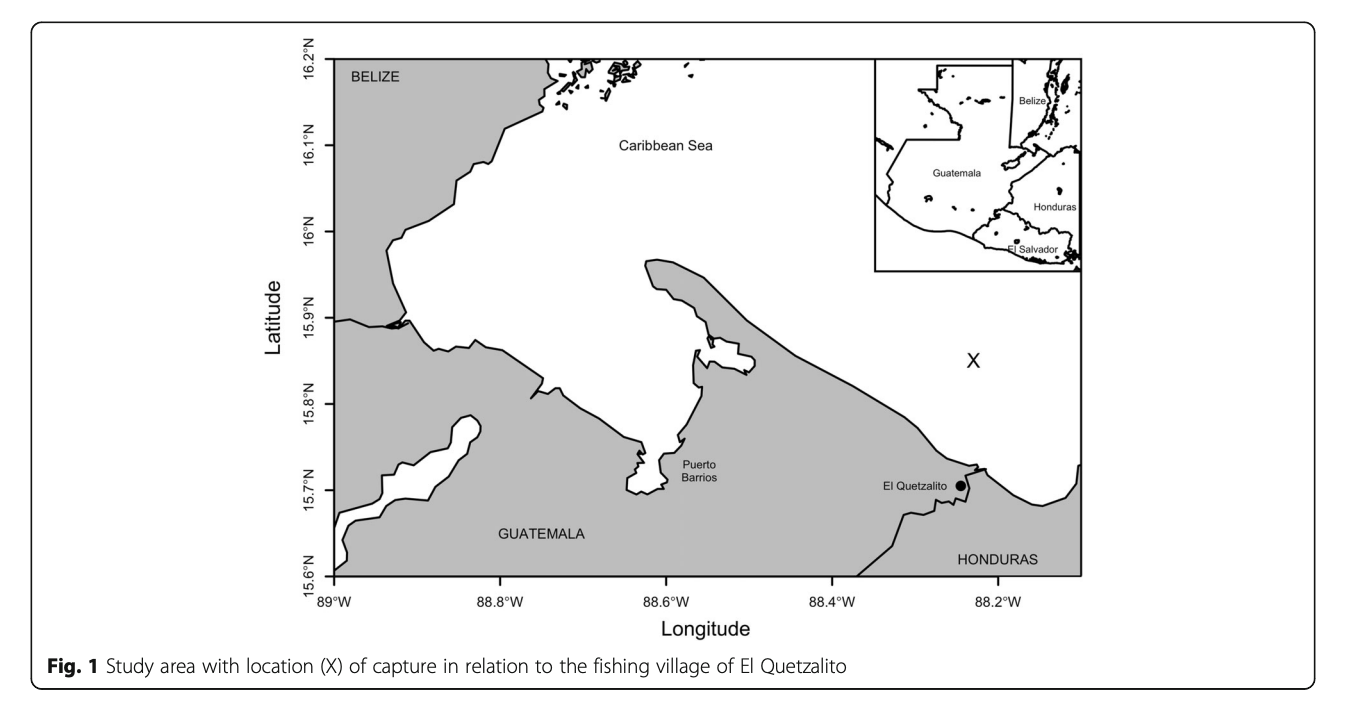
On 20 March 2016, five whitesaddled catsharks were captured by artisanal fishers from El Quetzalito, Izabal, using a 1,000 m bottom trammel net with 3.5-inch mesh at 200 m depth. The specimens were preserved and deposited in the CEMA collection of the Universidad de San Carlos de Guatemala under references 252–256. Ninety-one morphometric measurements were taken, and maturity of males was determined from full clasper calcification.
Figure 1. Study area showing the capture location (X) in relation to El Quetzalito.
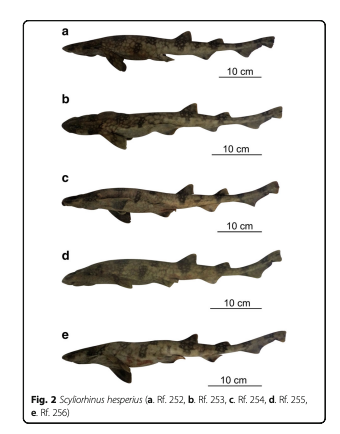
Figure 2. Scyliorhinus hesperius: specimens Rf. 252, 253, 254, 255 and 256.
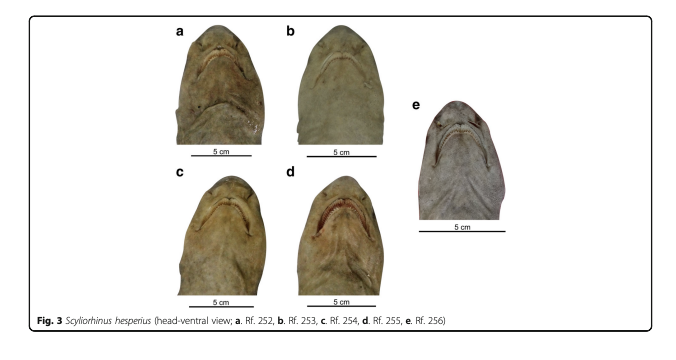
Figure 3. Scyliorhinus hesperius, ventral view of the head of specimens Rf. 252–256.
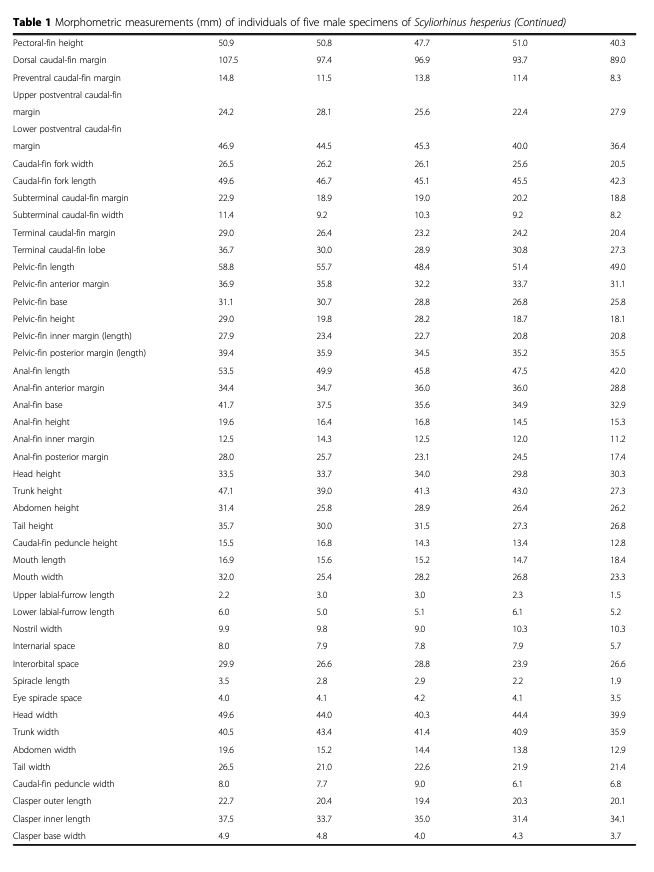
Table 1. Continuation of morphometric measurements (mm) of the five male Scyliorhinus hesperius specimens.
Results
Systematic account
Family: Scyliorhinidae Gill, 1862.
Genus: Scyliorhinus Blainville, 1816.
Species: Scyliorhinus hesperius Springer, 1966.
Common name: Whitesaddled catshark.
The five mature males measured 510, 455, 429, 435 and 420 mm TL. They were captured approximately 15 km north of El Quetzalito at 15°49.776′ N, 88°12.340′ W. The colour pattern consisted of seven to eight dark saddles with large pale spots, light-brown dorsal colouration and paler ventral colouration. The first dorsal fin originates behind the pelvic fins and is larger than the second; lower labial furrows are present.
Discussion
The study provides multiple first records: the largest specimen described, based on reference 252; the first mature males; and the first record in Guatemala, extending the known Caribbean range. The all-male capture raises the question of sex segregation at 200 m depth in Guatemalan waters. The species is listed as Data Deficient by the IUCN because information on its biology is insufficient. Continued monitoring is necessary to clarify its distribution, ecology and potential sex- and size-segregation patterns.
Reference
Hacohen-Domené, A., Polanco-Vásquez, F. & Graham, R.T. (2016). First report of the whitesaddled catshark Scyliorhinus hesperius (Springer 1966) in Guatemala’s Caribbean Sea. Marine Biodiversity Records, 9, 101. https://doi.org/10.1186/s41200-016-0103-9