First record of the chimaera Neoharriotta carri (Bullis and Carpenter 1966) in the Caribbean of Guatemala
Abstract
A new record of Neoharriotta carri is reported for Guatemala’s Caribbean. A male and female chimaera were caught with a single-panel trammel net off El Quetzalito in February 2015 and January 2016. These are the first records in Guatemalan waters and the northernmost records in the western Atlantic.
Keywords: Rhinochimaeridae; first record; range extension; Caribbean.
Background
Longnose chimaeras are small to medium chondrichthyans with broad heads and elongated spear-like snouts. The family Rhinochimaeridae includes Harriota, Neoharriotta and Rhinochimaera. N. carri was previously known from upper and mid continental slopes of the southern Caribbean at 219–458 m depth. Population information for chimaeras is generally limited.
Methods
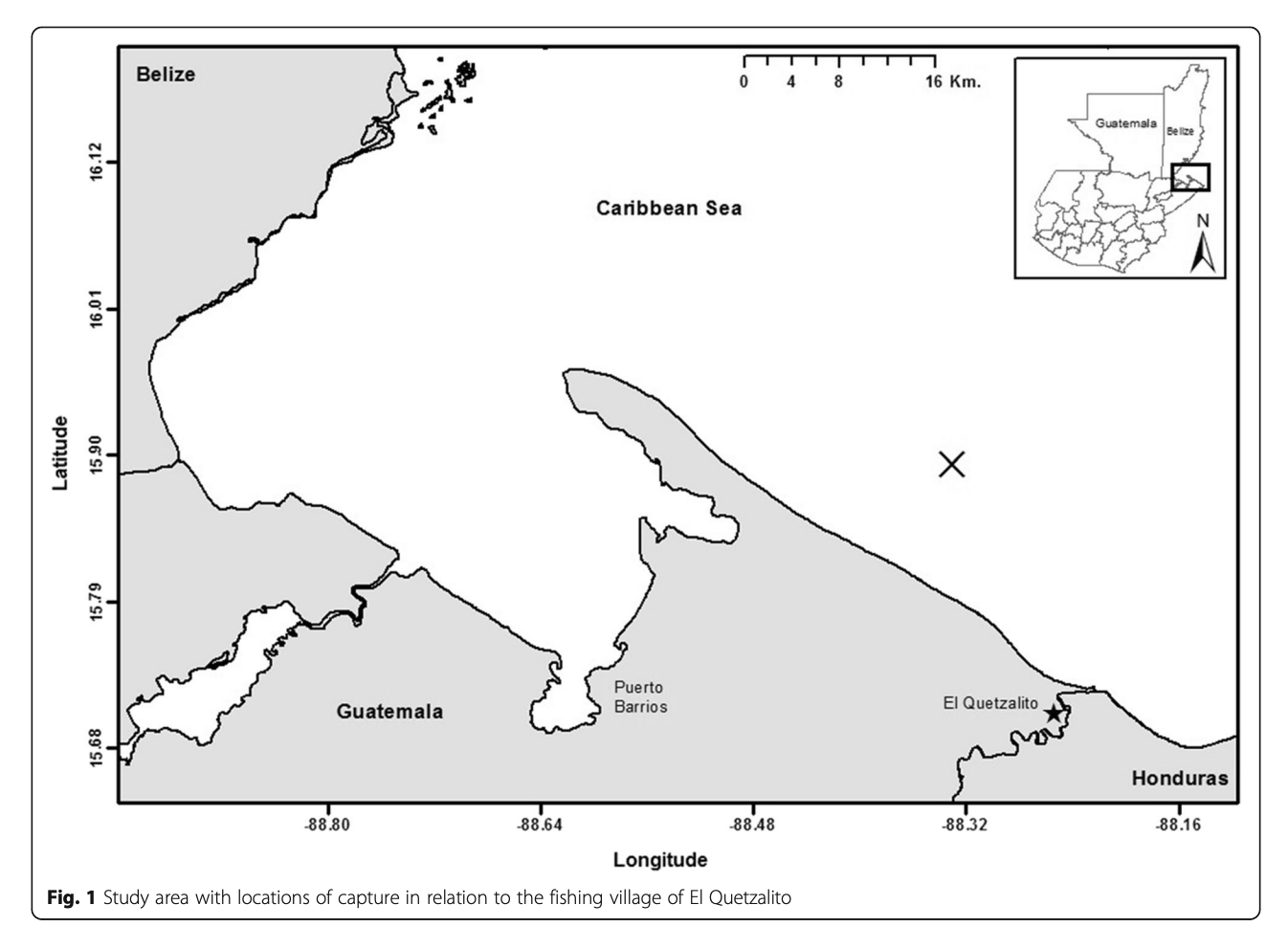
Two specimens were captured on 14 February 2015 and 30 January 2016 approximately 16 km from El Quetzalito, Izabal (15°52.374′ N, 88°18.712′ W), at about 240 m depth, with a 1,000 m bottom trammel net of 3.5-inch mesh. The 2016 specimen was preserved and deposited in the CEMA collection of Universidad de San Carlos de Guatemala under reference 162. Forty-six measurements were recorded.
Figure 1. Study area and locations of capture in relation to El Quetzalito.
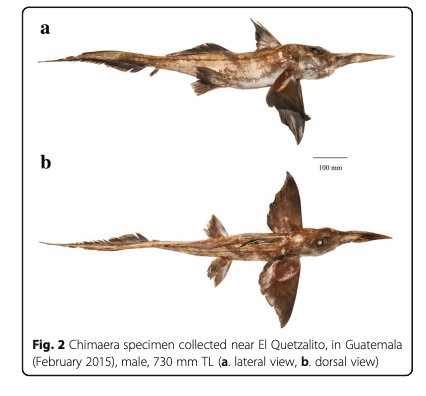
Figure 2. Male chimaera collected near El Quetzalito in February 2015, 730 mm TL.
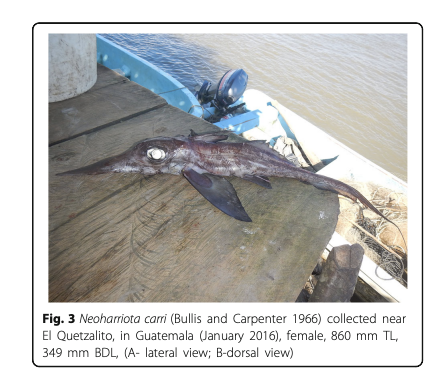
Figure 3. Female Neoharriotta carri collected near El Quetzalito in January 2016.
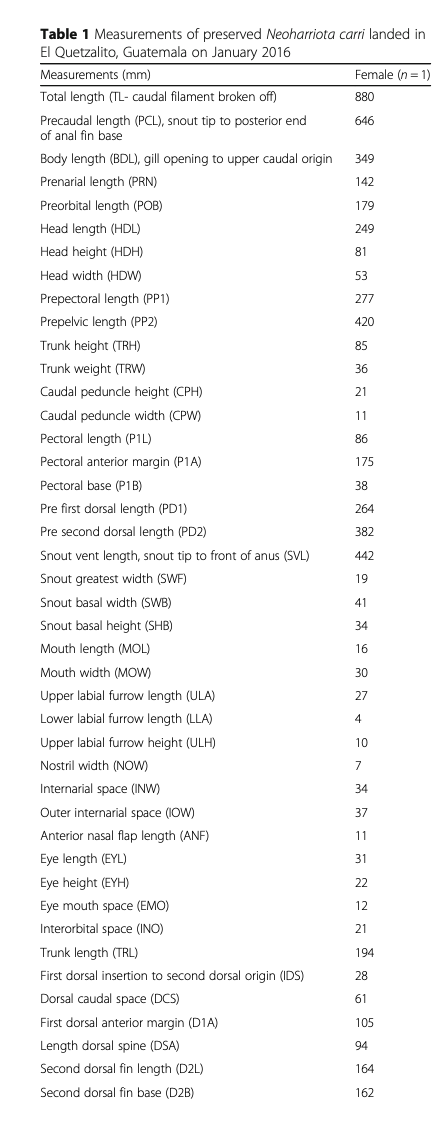
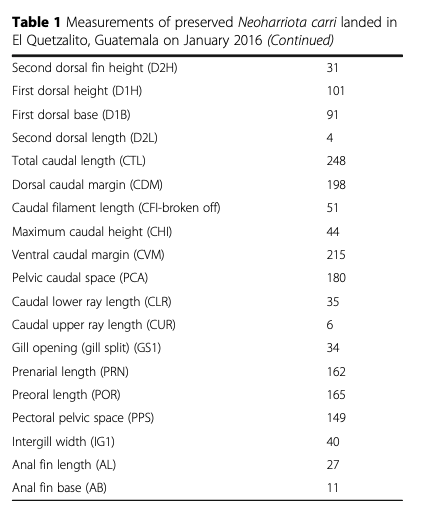
Table 1. Measurements of preserved Neoharriotta carri landed in El Quetzalito, Guatemala, January 2016.
Results
Family: Rhinochimaeridae Garman, 1901.
Genus: Neoharriotta Bigelow and Schroeder, 1950.
Species: Neoharriotta carri Bullis and Carpenter, 1966.
Common name: dwarf sicklefin chimaera; longnose pale chimaera.
The 2015 specimen was a presumed mature male of 730 mm total length. The 2016 specimen was a presumed mature female, 880 mm total length and 349 mm body length. It had an elongated pointed snout, prominent anal fin, triangular pectoral and pelvic fins darker than the body, and a first dorsal fin preceded by a spine.
Discussion and conclusion
The 2016 female is the largest N. carri specimen reported to date, exceeding the previous maximum of 820 mm TL. The records are the first for Guatemala, extend the known range and are the northernmost report in the western Atlantic. Fishers reported at least ten additional specimens near the capture site, with no evident seasonal variation. The species is not targeted and represents bycatch of traditional small-scale fisheries; when landed it is generally not consumed.
Acknowledgments
Fundación Mundo Azul thanks the El Quetzalito community for its support and Josué Ayala for reporting the specimen collection.
Reference
Polanco-Vásquez, F., Hacohen-Domené, A., Méndez, T., Pacay, A. & Graham, R.T. (2017). First record of the chimaera Neoharriotta carri (Bullis and Carpenter 1966) in the Caribbean of Guatemala. Marine Biodiversity Records, 10, 1. https://doi.org/10.1186/s41200-016-0104-8