Description and characterization of the artisanal elasmobranch fishery on Guatemala’s Caribbean coast
Abstract
Small-scale shark and ray fisheries are conducted throughout Central America’s Caribbean coast, but catch composition and diversity are poorly documented, especially in Guatemala. Landings surveys were conducted in El Quetzalito and Livingston between January 2015 and July 2017. Biological data from 688 landed chondrichthyans were collected: 31 species (24 sharks, six rays and one chimaera). The most frequently captured species were Carcharhinus falciformis (30.2%), Sphyrna lewini (12.7%), Hypanus guttatus (12%) and Rhizoprionodon spp. (6.7%). Landed sharks included most size classes, with a high proportion of juveniles of low-productivity species. This research provides a baseline for future fisheries trends and persistence assessments.
Introduction
Shark and ray fisheries are increasing as demand for their products rises, while species-specific landings remain limited in much of the Caribbean. Guatemala’s Caribbean coast supports small-scale artisanal fisheries using 6–7 m boats, longlines and gillnets. Baseline data are essential for monitoring exploited populations and developing effective management plans.
The study aimed to provide a baseline for chondrichthyan catches along Guatemala’s Caribbean coast from 20 fishing vessels at the two main ports; provide biological information on frequently captured species; and generate a current taxonomic list.
Materials and methods
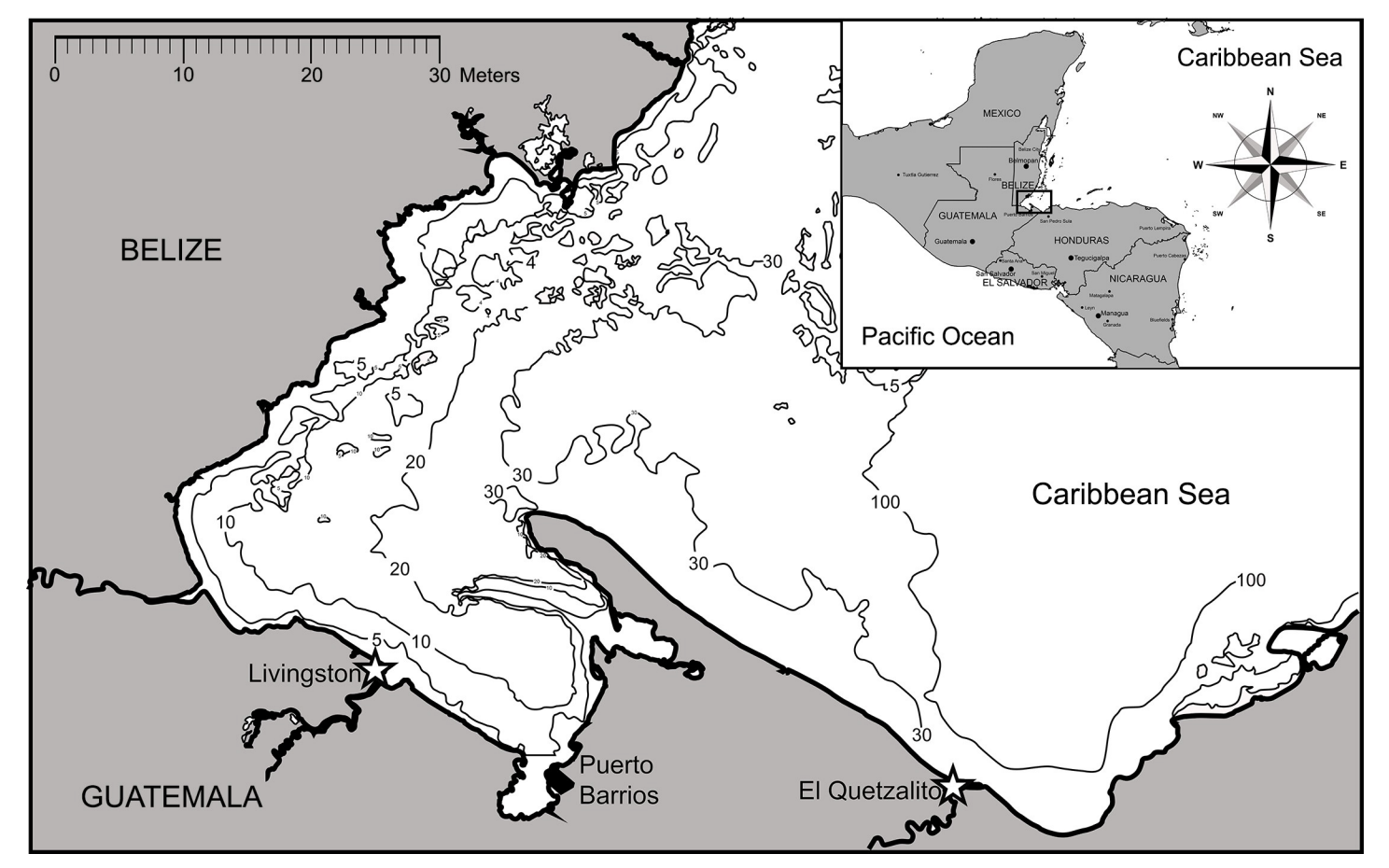
Study area and fishing
Surveys ran from January 2015 to July 2017 at El Quetzalito (15°43′34.72″ N, 88°17′25.38″ W) and Livingston (15°49′27.17″ N, 88°45′1.71″ W). El Quetzalito is within the Punta Manabique Wildlife Refuge; Livingston receives landings from communities between Río Dulce and Río Sarstún. Three fisheries were recognised: targeted elasmobranch fishing in El Quetzalito; a multispecies fishery in Livingston; and incidental capture in Livingston’s shrimp fishery.
Figure 1. Study area showing the locations (☆) where landings monitoring was conducted.
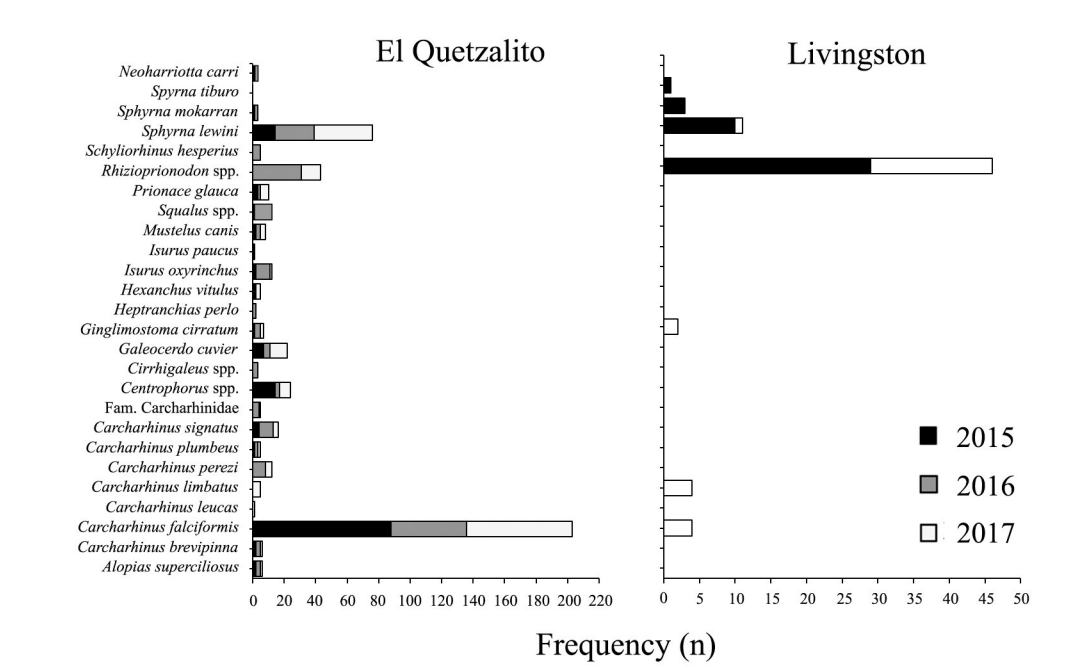
Figure 2. Captures of chimaera and sharks during the study period, by fishing community and year.
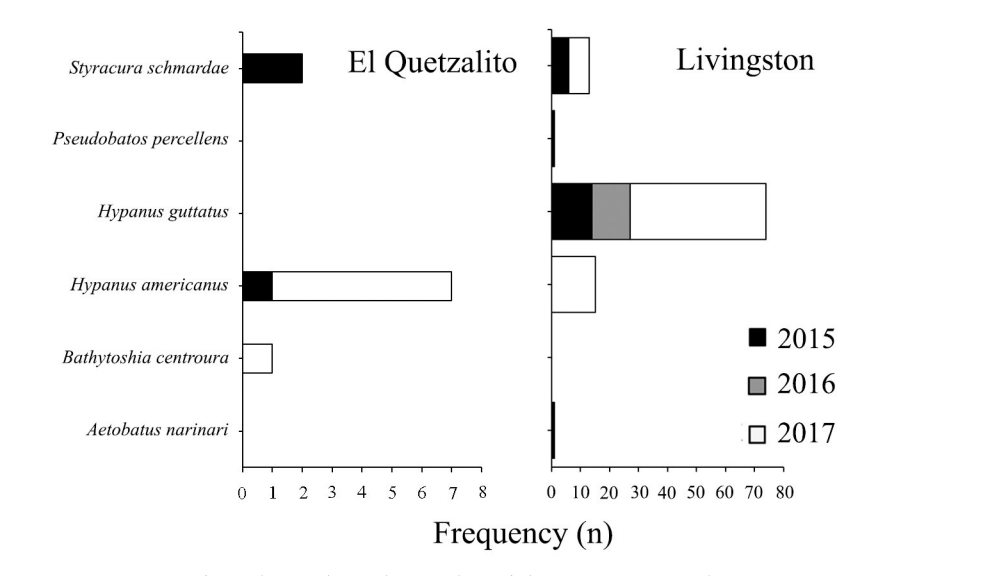
Figure 3. Captures of rays during the study period, by fishing community and year.
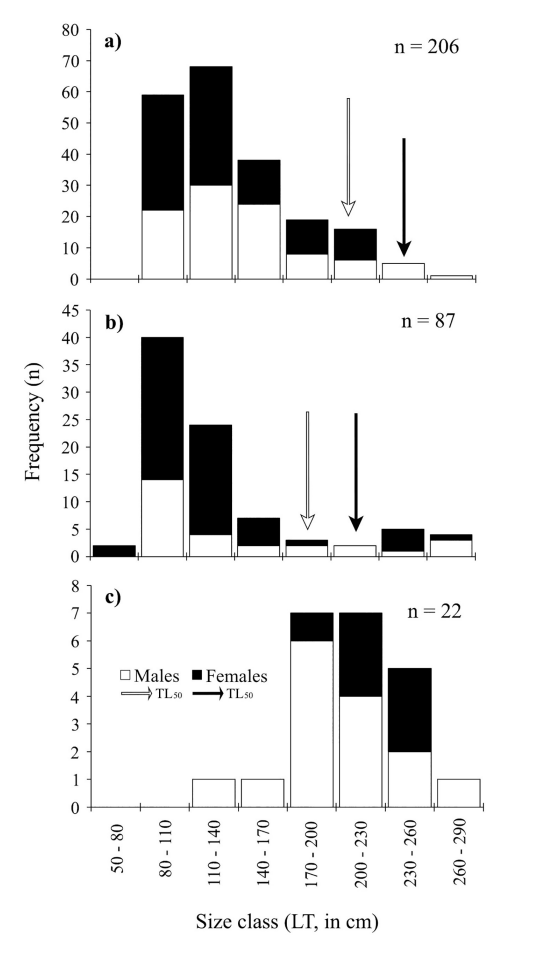
Figure 4. Size-frequency distribution of C. falciformis, S. lewini and G. cuvier, 2015–2017.
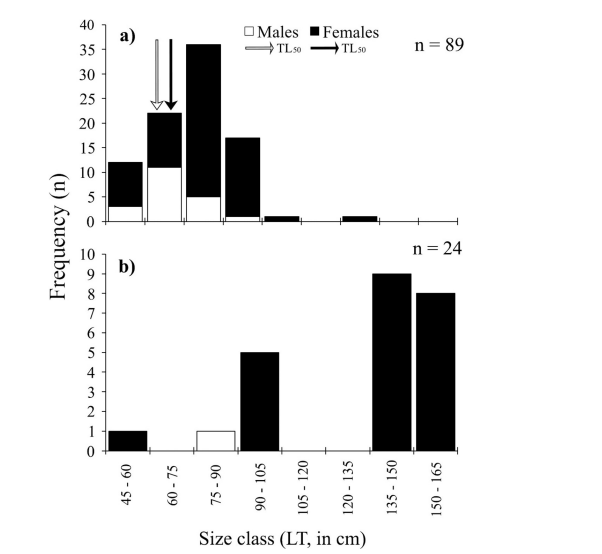
Figure 5. Size-frequency distribution of Rhizoprionodon spp. and Centrophorus spp., 2015–2017.
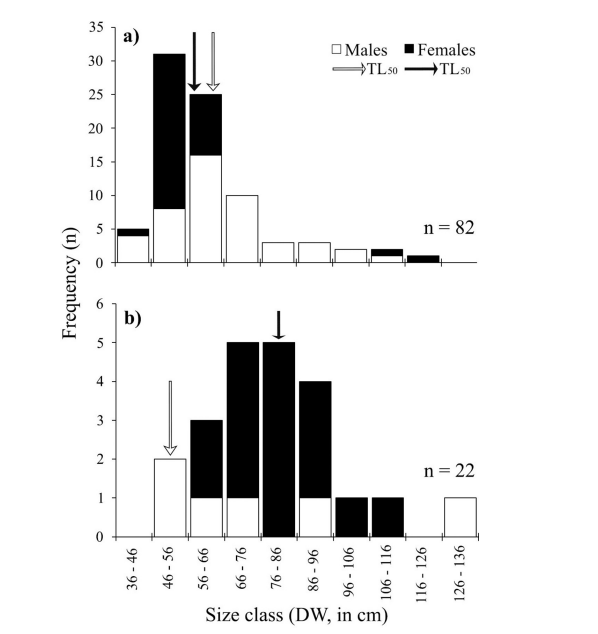
Figure 6. Size frequency of H. guttatus and H. americanus, 2015–2017.
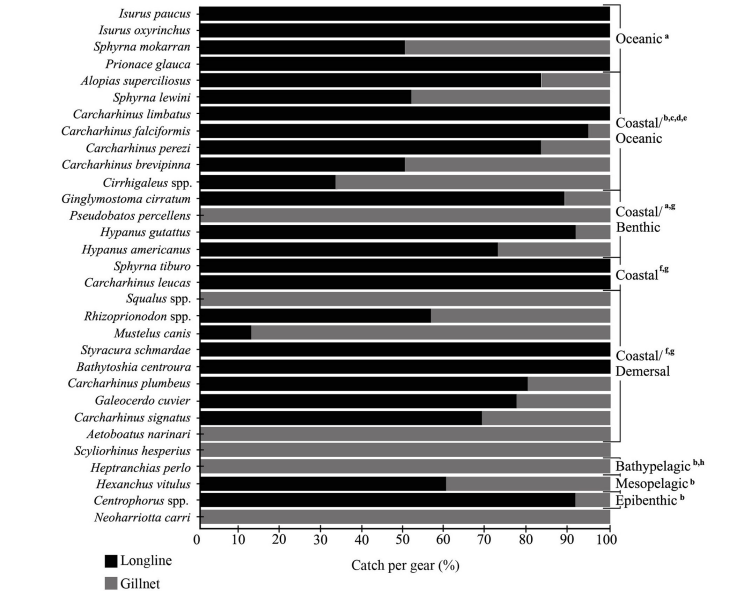
Figure 7. Fishing gears used to catch chondrichthyans landed in this study.
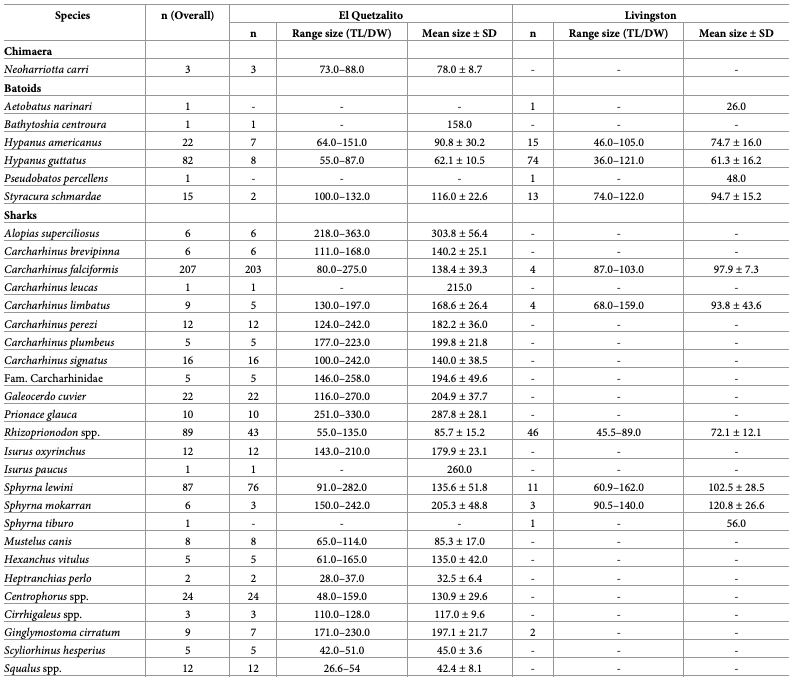
Table 1. Catch composition by species, locality, number of individuals, total length (TL) and disc width (DW).
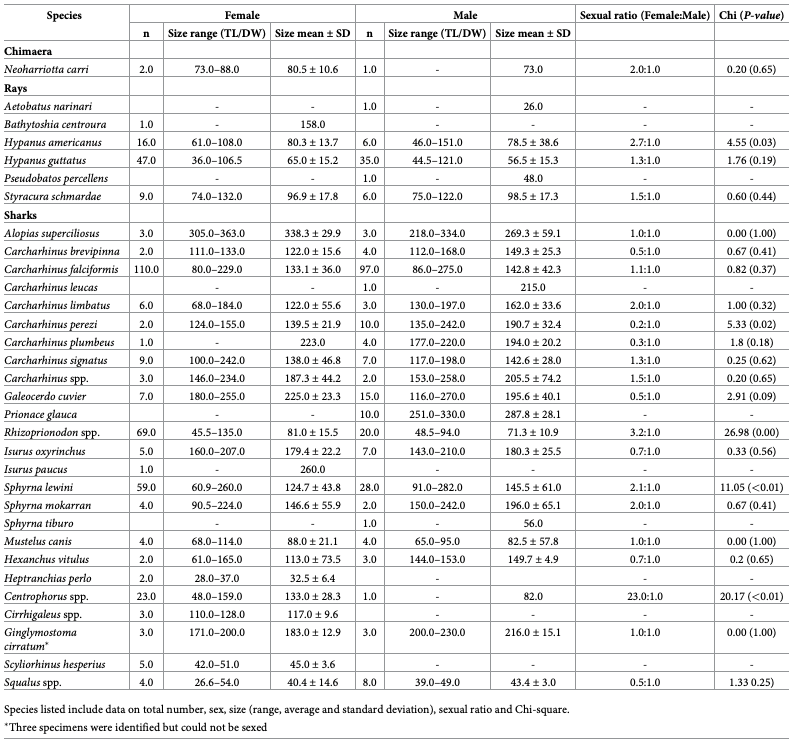
Table 2. Total number, sex, size range, mean and standard deviation, sexual ratio and Chi-square by species.
Landing monitoring and analysis
The same 20 boats were monitored every two weeks for several months. For sharks, local and scientific names, total, fork and precaudal length and sex were recorded; for rays, disc width, disc length and sex were recorded. Maturity of males was assessed from clasper calcification and rotation where possible. Species were identified to the lowest possible taxon using standard references. Sex-specific size composition was analysed for species with at least 20 measured individuals.
Results
Landings included 688 chondrichthyans: 563 sharks, 122 rays and three chimaeras, representing two subclasses, eight orders, 13 families, 21 genera and 31 species. Carcharhinidae represented 56% of the catch, Dasyatidae 15% and Sphyrnidae 13%. Eight species were first records in Guatemalan waters.
El Quetzalito yielded 513 chondrichthyans and was dominated by C. falciformis, S. lewini, Rhizoprionodon spp., Centrophorus spp. and tiger shark Galeocerdo cuvier. Livingston yielded 175 elasmobranchs, dominated by H. guttatus, Rhizoprionodon spp., H. americanus and Styracura schmardae. Longlines captured 76.3% of all chondrichthyans, compared with 23.7% captured by gillnets.
Size-frequency analysis highlighted juvenile-dominated landings. Of the recorded C. falciformis and S. lewini, 96.6% and 85.1%, respectively, were immature. Among H. guttatus, 59.1% were juveniles, and 40.9% of H. americanus were juveniles.
Discussion
This is the first fisheries-landings analysis of sharks, rays and chimaeras on Guatemala’s data-poor Caribbean coast. The wide diversity recorded reflects coastal, reef, pelagic and deep-sea habitats. The prevalence of juveniles suggests that fishing areas could serve as nursery habitat, although research on habitat use and reproductive status is needed to confirm this.
The predominance of immature silky and scalloped hammerhead sharks is especially concerning because both are CITES-listed and have conservation concerns. Continued community-based monitoring, biological research and socioeconomic studies are required to characterise fishing effort, catch changes, product value and trade, and to support traceability, appropriate management and conservation measures.
Acknowledgments
We acknowledge the fishing communities of El Quetzalito and Livingston, the fishers and volunteers who participated in landings monitoring and workshops, Fundación Mundo Azul, MarAlliance, T. López and S. Rendal.
Reference
Hacohen-Domené, A., Polanco-Vásquez, F., Estupiñan-Montaño, C. & Graham, R.T. (2020). Description and characterization of the artisanal elasmobranch fishery on Guatemala’s Caribbean coast. PLOS ONE, 15(1), e0227797. https://doi.org/10.1371/journal.pone.0227797