Characterization of the artisanal elasmobranch fisheries off the Pacific coast of Guatemala
Abstract
Landings of artisanal elasmobranch fisheries in three communities on Guatemala’s Pacific coast were evaluated from May 2017 through March 2020. Twenty-one elasmobranch species were identified. Bottom longlines used in multispecies fishing captured ray species and represented 59% of fishing effort; gill nets captured small shark species and represented 41%. The longtail stingray Hypanus longus, scalloped hammerhead Sphyrna lewini, and Pacific sharpnose shark Rhizoprionodon longurio accounted for 47.88%, 33.26%, and 7.97% of landings, respectively. Landings consisted mainly of neonates and juveniles, indicating nursery areas on Guatemala’s continental shelf.
Introduction
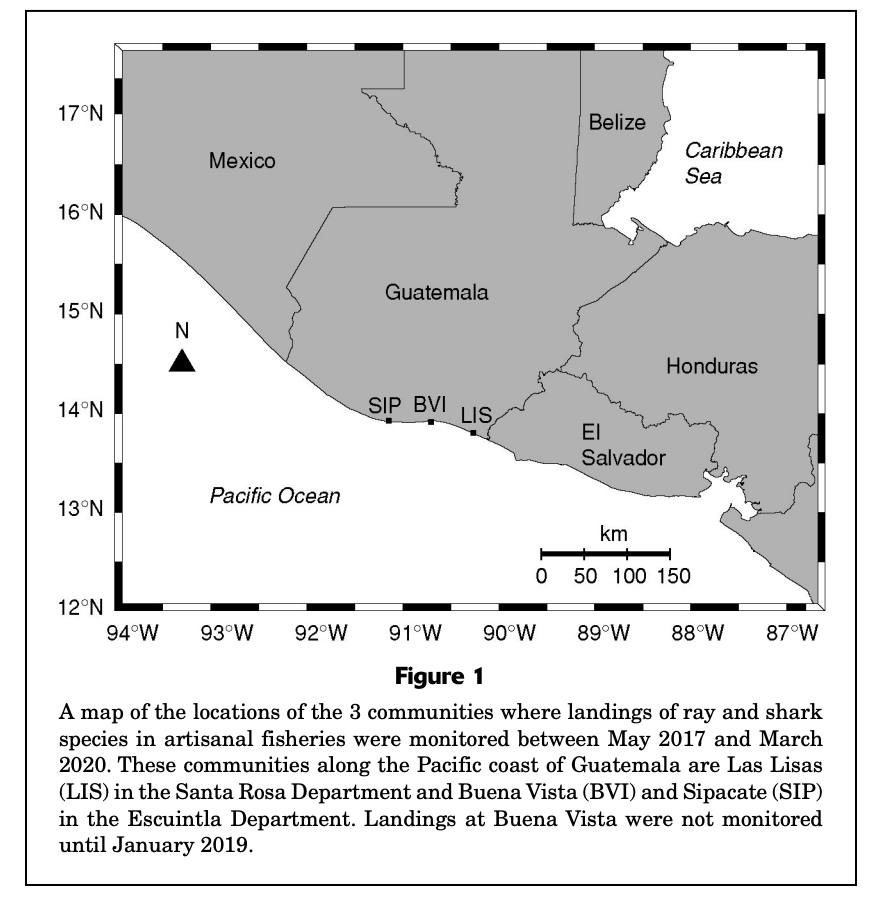
Despite widespread consumption and commercialisation of elasmobranch catches in Latin America, Guatemala lacks consistent catch statistics. This study continuously monitored artisanal landings from Las Lisas, Buena Vista and Sipacate, providing the first characterisation of commercially exploited ray species and shark species present in Pacific landings.
Methods
Sampling was conducted during 83 visits from May 2017 to March 2020: 34 at Las Lisas, 35 at Sipacate and 14 at Buena Vista. Species, sex, maturity, size, fishing effort and gear were recorded. Shark total and fork lengths were measured; ray disc width and length were recorded. Landings per unit effort used fishing nights as the unit of effort.
Figure 1. Locations of Las Lisas, Sipacate and Buena Vista, where ray and shark landings were monitored from May 2017 to March 2020.
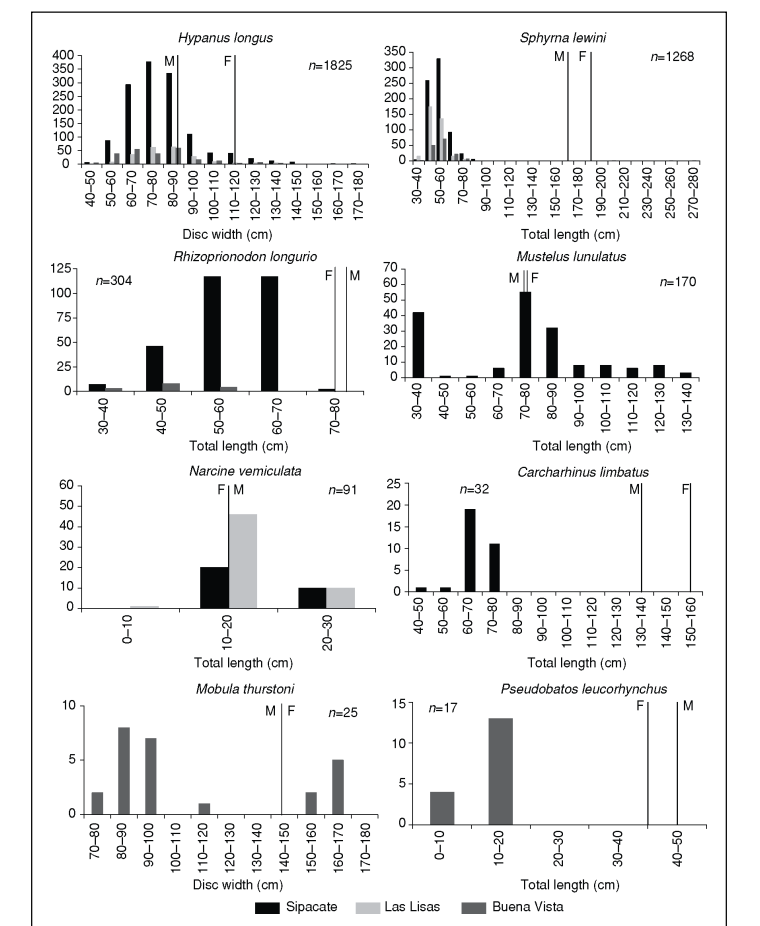
Figure 2. Pooled size-frequency distributions of elasmobranch species in sampled landings; vertical lines mark size at first maturity for males and females.
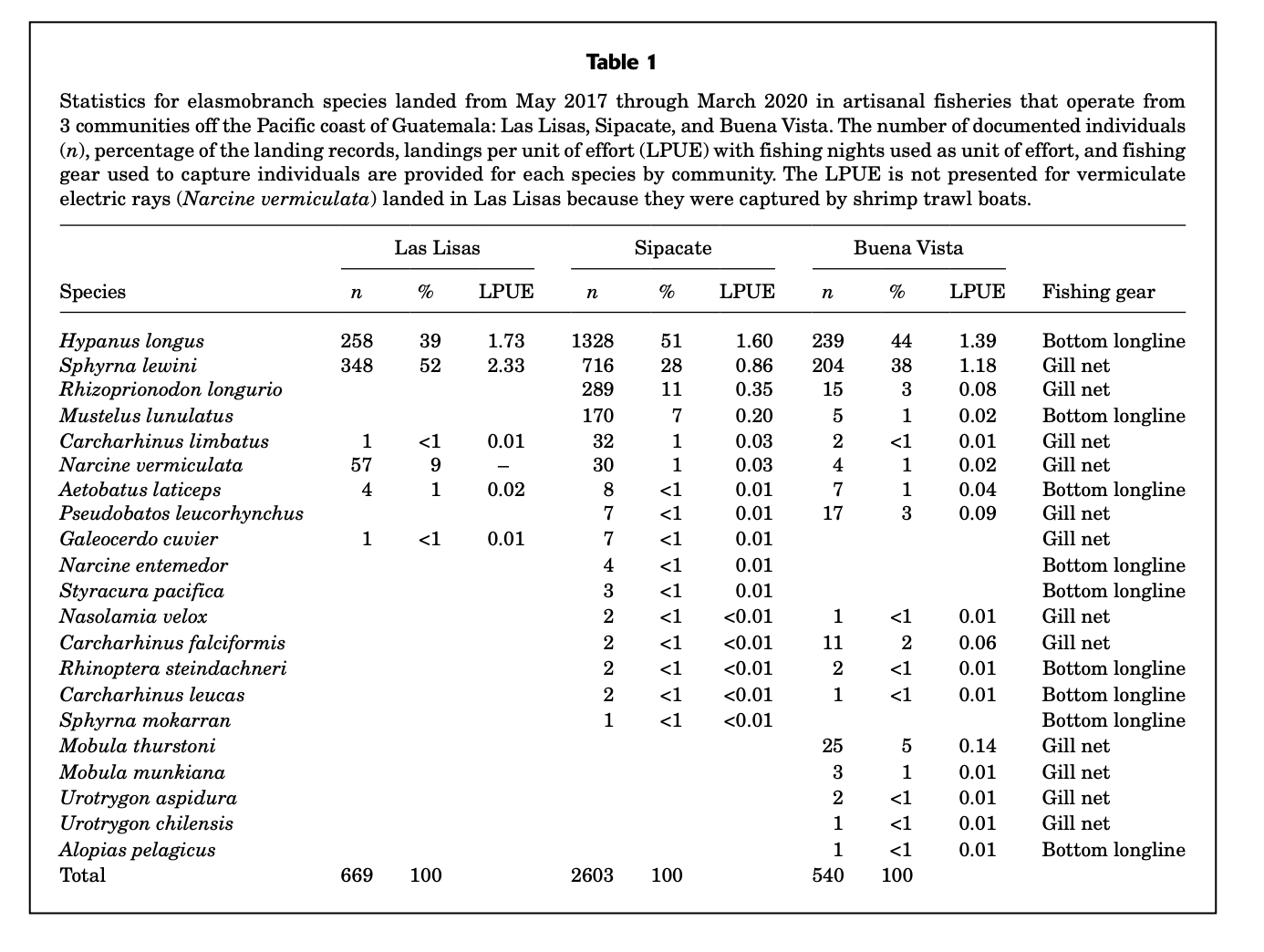
Table 1. Number, percentage, landings per unit effort and fishing gear for species landed in Las Lisas, Sipacate and Buena Vista.
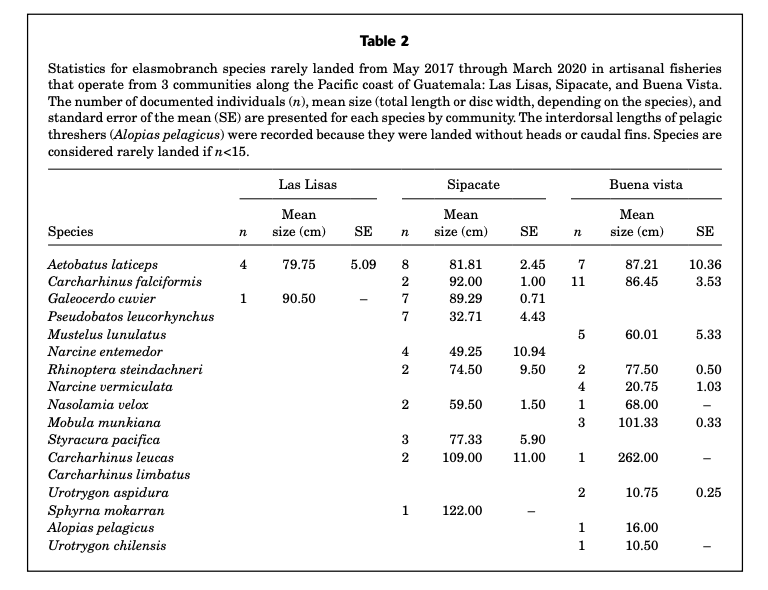
Table 2. Size statistics for elasmobranch species rarely landed in the three communities.
Results and discussion
Fishing occurs year-round without restrictions or seasonal closures. Two fishing gears were identified: monofilament bottom and mid-water gill nets, and bottom longlines. In Las Lisas, 669 elasmobranchs and six species were recorded; only 6% were mature. Sipacate recorded 2,603 individuals and 16 species, with 7% mature. Buena Vista recorded 526 individuals and 17 species, with 4% mature.
The scalloped hammerhead appeared in 70% of landings and the longtail stingray in 91%. The continued presence of neonate and juvenile hammerheads at Las Lisas and Sipacate indicates that these are likely important nursery areas in the eastern central Pacific. Eleven ray species were identified; the longtail stingray was the most frequently recorded species (n=1,825) and its meat is used locally as fillets.
Conservation and management
Although elasmobranchs are not formally recognised as target species in Guatemala’s artisanal fisheries, they are landed in high volume for several months and provide an important part of fishers’ income. Most fleets operate without permits or official records. Protection of nursery areas, especially for the Critically Endangered scalloped hammerhead, and continuous monitoring are essential to improve management of elasmobranchs in the eastern central Pacific.
Acknowledgments
This study was supported by Fundación Mundo Azul, the Rufford Foundation, PADI Foundation, Waitt Foundation and Shark Conservation Fund. We thank Guatemala’s National Council of Protected Areas, J. Ortíz, the Centre for Marine Studies and Aquaculture of the University of San Carlos of Guatemala, field collaborators and participating fishers.
Reference
Avalos Castillo, C. G. & Santana Morales, O. (2021). Characterization of the artisanal elasmobranch fisheries off the Pacific coast of Guatemala. Fishery Bulletin, 119, 3–9. https://doi.org/10.7755/FB.119.1.2