Shark species composition and catch variability in Guatemala’s artisanal Pacific fishery: A call for spatial and temporal management

Contents lists available at ScienceDirect
Regional Studies in Marine Science
journal homepage: www.elsevier.com/locate/rsma
Shark species composition and catch variability in Guatemala’s artisanal Pacific fishery: A call for spatial and temporal management
Maria de Belen Chacón-Paza, Julio Sánchez-Jiméneza, Elisa Areanoa, Juan Carlos Pérez-Jiménez
a Fundación Mundo Azul, Km 21.5 carretera a Villa Canales, Guatemala City, Guatemala
b El Colegio de la Frontera Sur, Av. Rancho Polígono 2-A, Ciudad Industrial, CP. 24500, Lerma, Campeche, Mexico
Abstract:
Artisanal shark fisheries along the Pacific coast of Guatemala operate with minimal regulation, raising concerns about the sustainability of catches and the conservation of vulnerable species. In support of Guatemala’s National Plan of Action for Sharks, Rays, and Chimeras (NPOA-Guatemala), this study aimed to (1) update the inventory of shark species landed in artisanal fisheries and (2) assess seasonal and annual variation in catch rates, size structure, sex ratios, and maturity stages of the most frequently landed species. From 2017–2024, 2386 monitoring days yielded data from 9527 fishing trips across key communities. A total of 24,987 sharks from 14 species were recorded, with five species, Sphyrna lewini, Rhizoprionodon longurio, Carcharhinus falciformis, Mustelus lunulatus, and C. limbatus, accounting for 98.5% of landings. Notably, 78.5% of the recorded species are classified as threatened by the IUCN, and the catch was heavily dominated by early life stages. Seasonal size trends indicated a consistent presence of these stages in coastal waters (captured in fishing operations conducted within 30 km of the shoreline), with this pattern occurring consistently across years. CPUE and size structure exhibited spatial and seasonal variation patterns, likely influenced by differences in gear selectivity, habitat characteristics,and the non-standardized nature of the CPUE estimates. However, these findings highlight the potential value of spatial and temporal management strategies and the need for further research, community-based monitoring, and co-management initiatives to refine, guide and strengthen their implementation in the artisanal fisheries of the coastal communities studied along the Guatemalan Pacific coast.
* Corresponding author. E-mail address: jcperez@ecosur.mx (J.C. Pérez-Jiménez).
https://doi.org/10.1016/j.rsma.2026.105113
Received 17 December 2025; Received in revised form 29 May 2026; Accepted 1 June 2026
Available online 5 June 2026
2352-4855/© 2026 The Author(s). Published by Elsevier B.V. This is an open access article under the CC BY license (http://creativecommons.org/licenses/by/4.0).
1. Introduction
Guatemala’s Exclusive Economic Zone (EEZ) encompasses approximately 110,944 km², including a continental shelf of 14,009 km² and 254 km of coastline. These marine and coastal areas support commercially important populations of teleost fishes, crustaceans, and elasmobranchs.
Although fisheries contribute only 0.2% to the national Gross Domestic Product (GDP), they remain a vital source of food security and employment for coastal communities. Nevertheless, the exploitation status of most fishery resources in the country remains poorly understood due to the lack of a permanent fisheries monitoring and assessment program (FAO, 2018).
Guatemala’s General Fisheries and Aquaculture Law defines the procedures for obtaining fishing licenses and permits, yet critical information, such as the number of active fishers, fishing vessels, and total fishing effort, remains incomplete. It is estimated that around 20,000 artisanal fishers operate nationwide, with approximately 70% based on the Pacific coast, where catch volumes are highest (FAO, 2018). Catch estimates vary considerably: Lindop et al. (2015) reported annual landings between 24,721 and 54,896 tons during 2000–2010, while FAO (2018) reported values ranging from 10,000 to 38,000 tons for the same period, highlighting the uncertainty in official records.
Artisanal fisheries in the Pacific and Caribbean coasts of Guatemala primarily use small (6–7 m) outboard motorboats. Elasmobranchs, whether targeted or caught as bycatch, are primarily captured using longlines and gillnets, which are the predominant fishing gears in both the Atlantic and Pacific coasts of Guatemala (Hacohen-Domene et al., 2020; Avalos-Castillo and Santana-Morales, 2021). However, the absence of systematic landing monitoring programs and species-specific regulations for elasmobranchs has resulted in a lack of reliable data on annual catch estimates at the species level. The only available figures are from FAO (2018), which reports national shark catches fluctuating
between 90.7 and 408 tons from 2002 to 2015.
Despite these information gaps, recent studies have provided important insights into the catch composition of elasmobranchs in both artisanal and industrial trawl fisheries on the Pacific coast. Avalos-Castillo and Santana-Morales (2021) documented 21 elasmobranch species landed by the artisanal fleet from 2017 to 2020, including ten shark and eleven ray species. The most frequently reported species were the longtail stingray (Hypanus longus, 47.88%), the scalloped hammerhead shark (Sphyrna lewini, 33.26%), and the Pacific sharpnose shark (Rhizoprionodon longurio, 7.97%). Meanwhile, Sánchez-Jiménez et al. (2023) reported the capture of 13 elasmobranch species in the shrimp trawl fishery between 2017 and 2022, including 11 ray species and two shark species. The most commonly landed were the vermiculate electric ray (Narcine vermiculata, 32.03%), the spinetail round ray (Urotrygon aspidura, 29.85%), the whitesnout guitarfish (Pseudobatos leucorhynchus, 13.68%), and the giant electric ray (Narcine entemedor, 9.55%). However, temporal analyses of catch composition and catch rates remain largely absent.
The National Plan of Action for the Conservation and Management of Sharks, Rays, and Chimaeras (NPOA-Guatemala) identifies the urgent need to address major information gaps. Key priorities include the long-term collection of data on catch composition (e.g., size, sex, maturity), fishing effort, and catch rates to establish baseline indicators for evaluating fishing impacts and supporting management decisions. In this context, the present study aims to: (1) update the inventory of shark species recorded in the landings of artisanal fisheries along the Guatemalan Pacific coast, and (2) estimate the seasonal and annual variability in catch rates, size structure, sex ratios, and maturity stages of the most frequently landed species.
2. Material and methods
2.1. Ethical statement
In this study, no experiments with animals were performed. Specimens were recorded as part of fishery-dependent surveys. Therefore, all examinations were made upon deceased animals captured during commercial fishing operations.
2.2. Study area
Elasmobranch landing data were collected from six artisanal fishing communities along Guatemala’s Pacific coast: Champerico, El Dormido, Las Lisas, Buena Vista, San José, and Sipacate (Fig. 1). However, the majority of records originated from Las Lisas, Buena Vista, and Sipacate. Guatemala’s Pacific continental shelf is relatively narrow, extending approximately 50 km offshore, and spans an area of 14,009 km². Along the 254 km coastline, around 45 communities engage in artisanal fisheries where elasmobranchs are commonly landed as bycatch(Ávalos-Castillo and Santana-Morales, 2021).
Las Lisas is located within the Chiquimulilla wetland in the department of Santa Rosa. Sipacate, in the department of Escuintla, lies within the Sipacate-Naranjo National Park, a coastal protected area approximately 20 km long and 1 km wide, comprising mangrove forests, lagoons, and sandy beaches (CONAP, PNUD, 2017). Unlike the other sites, Buena Vista does not fall within the boundaries of any formally recognized wetland or protected area.
2.3. Fishery-dependent monitoring
Monitoring activities were conducted from May 2017 to February 2020 by trained biologists from the Blue World Foundation (Fundación Mundo Azul). From March 2020 to December 2024, the monitoring was continued by a combined team of biologists and trained local fishers as part of a Citizen Science program.
A total of 2386 monitoring days were completed, during which 9527 landing events from artisanal fishing boats were recorded. These boats are typically fiberglass vessels ranging from 7.5 to 9 m in length and equipped with outboard motors. The fisheries primarily targeted teleosts and rays using monofilament gillnets (typically ~600 m in length, with mesh sizes ranging from 4 to 6 cm), which were deployed either at the bottom or in midwater. In addition, bottom longlines were used, equipped with J-hooks or Eagle Claw half-circle hooks, with longline sets comprising approximately 400–1100 hooks, with hook sizes ranging from 3 to 6 cm. Fishing trips typically lasted 1–2 days, during which fishers conducted between one and five sets. These values represent approximate ranges and may vary among vessels, crews, and fishing operations. Additionally, due to the fishing fleet type, precise georeferenced fishing locations were not recorded; however, we documented that fishing operations occur along the coastal zone, from the coastline to a maximum distance of 30 km offshore.
The intensity and frequency of monitoring varied throughout the study period due to changes in weather, fishing effort, resource availability, and market demand. Standardization of catch data was not feasible due to variability in gear type, gear quantity, and target species. In many instances, fishers used a combination of gillnets and longlines within the same fishing trip. However, beginning in 2020, the number of operational boats per day was consistently recorded in Las Lisas, Buena Vista, and Sipacate, allowing the calculation of Catch per unit effort (CPUE) as the number of sharks landed per boat.
In this study, CPUE is used as a relative index of catch rates derived from fishery-dependent monitoring rather than as a standardized estimate of abundance. Because monitoring effort varied spatially and temporally among communities and years, and fishing gear characteristics (e.g., number of hooks in longlines, net length, and soak time) were not standardized across vessels, CPUE values should be interpreted cautiously. These variations in fishing effort, gear configuration, and monitoring coverage may influence catch rates and limit direct comparisons among fishing communities, bimesters or years. Therefore, the CPUE estimates presented here are only intended to describe relative patterns in shark catches within the monitored communities.
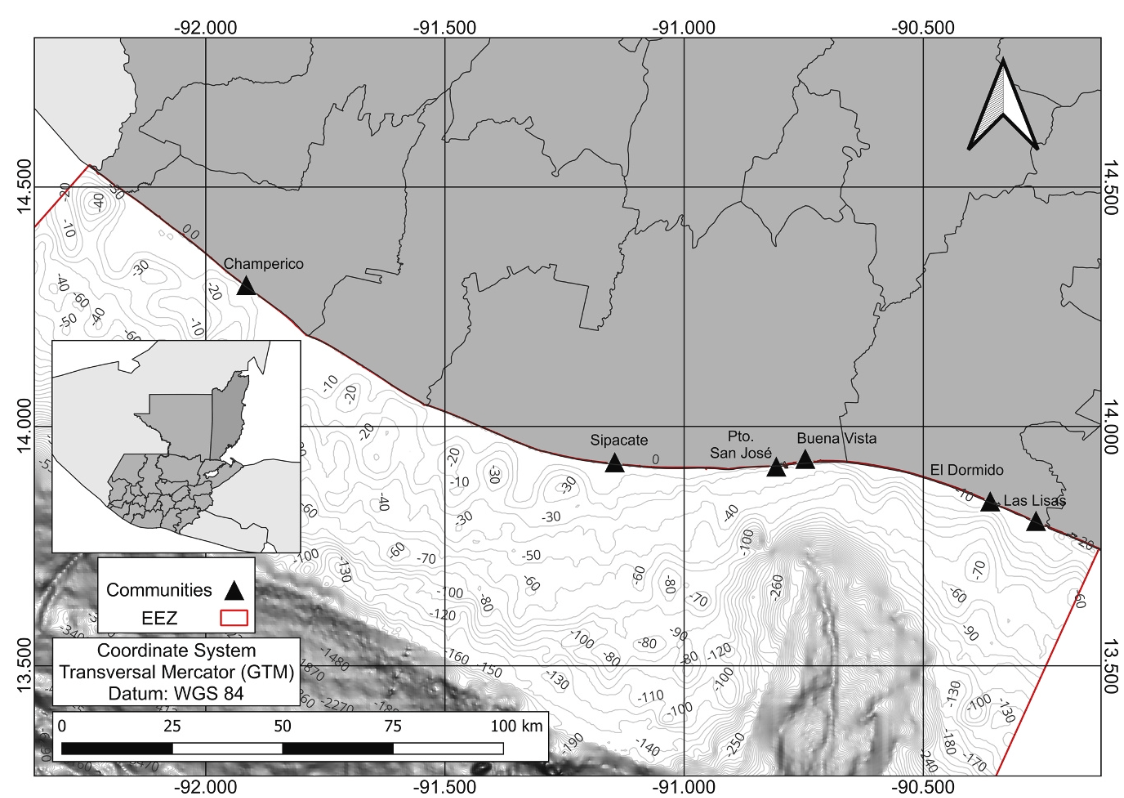
Fig. 1. Location of the fishing communities of Champerico, El Dormido, Las Lisas, Buena Vista, San José, and Sipacate on the Pacific coast of Guatemala.
2.4. Biological data collection
Specimens were measured to the nearest centimeter. Total length (TL) was measured in a straight line from the tip of the snout to the tip of the caudal fin in its natural position (Compagno, 1984). Sex determination was performed macroscopically based on the presence or absence of claspers. Individuals were classified as mature or immature. Males were considered mature if they had fully calcified claspers (Clark and von Schmidt, 1965). Females were considered mature if they were pregnant, or, if not pregnant, based on species-specific size-at-maturity thresholds reported in the literature (Compagno, 1984; Castro, 2011;
Ebert et al., 2021).
2.5. Statistical analysis
Data on CPUE, size structure, sex ratios, and maturity stages were analyzed to evaluate both seasonal (bimester periods) and annual trends. Normality and homogeneity of variance were assessed prior to statistical testing. Where assumptions of normality and equal variance were met, t-tests or one-way ANOVAs were used. If these assumptions were violated, non-parametric tests (Mann–Whitney U and Kruskal–Wallis) were applied (Zar, 1996). All continuous data are reported as mean ±standard deviation (SD). Effect sizes (e.g., Cohen's d, η² or r) were calculated for statistically significant comparisons to quantify the magnitude of differences and to aid in their interpretation beyond statistical significance. Differences with small effect sizes were interpreted cautiously, recognizing that statistical significance may arise from sample size and variability rather than reflecting biologically meaningful variation. Because multiple statistical comparisons were conducted across species, communities, seasons, and years, the potential for inflated Type I error rates should be considered. Although formal corrections
for multiple testing were not applied, results were interpreted cautiously and emphasis was placed on consistent patterns and ecological relevance rather than solely on statistical significance.
Comparisons of proportions (e.g., sex or maturity categories) across communities, bimester periods, and years were evaluated using independent tests for categorical data, to determine whether the proportions of the categories of the studied variable (e.g., sex or maturity stage) were independent of the categories of another variable (e.g., fishing community, bimester periods, or years). However, sex ratio patterns observed in this study should be interpreted cautiously because the data were derived from fishery-dependent monitoring. Deviations from an expected 1:1 sex ratio in the catch may reflect methodological or ecological biases rather than true differences in population structure.
3. Results
3.1. Shark species recorded in the Guatemalan Pacific in 2017–2024
A total of 24,987 sharks, representing 14 species, were recorded in the artisanal fisheries catch along the Pacific coast of Guatemala. Of these, five species accounted for 98.48% of all landings. The scalloped hammerhead (Sphyrna lewini) was the most frequently landed species, comprising 71.12% of the total catch, followed by the Pacific sharpnose shark (Rhizoprionodon longurio, 11.28%), silky shark (Carcharhinus falciformis, 7.25%), sicklefin smoothhound (Mustelus lunulatus, 5.02%), and blacktip shark (Carcharhinus limbatus, 3.81%) (Table 1). Most individuals landed had a total length (TL) of less than 100 cm,
suggesting a predominance of juveniles and subadults in the catch. Regarding conservation status based on the IUCN Red List of Threatened Species, 11 of the 14 recorded species are classified as Vulnerable, Endangered, or Critically Endangered. Only two species are listed as Near Threatened, and one species is considered of Least Concern (Table 1). In terms of international trade regulation, all species except M. lunulatus and Galeocerdo cuvier are included in Appendix II of the Convention on International Trade in Endangered Species of Wild Fauna and Flora (CITES).
3.2. Scalloped hammerhead shark, Sphyrna lewini
3.2.1. Size structure by fishing community
Of the Sphyrna lewini individuals for which both size and sex were recorded (N=16,871), 8713 were females and 8158 males. Females had a significantly smaller mean total length (TL) than males (56.35 ±15.44 cm vs. 56.94 ±13.19 cm; t=− 2.41, P=0.016; Cohen’s d=0.04) (Fig. 1a). Mean TL varied significantly among fishing communities (H=273.47, P <0.0001; η² = 0.02), with the largest individuals recorded in Buena Vista (58.61 ±17.15 cm), followed bySipacate (56.44 ±12.90 cm), and the smallest in Las Lisas (54.04±16.81 cm). However, in both cases the effect sizes were small, indicating that the magnitude of these differences is low and unlikely to be biologically meaningful, and therefore should be interpreted with caution.
3.2.2. Sex ratio and maturity status
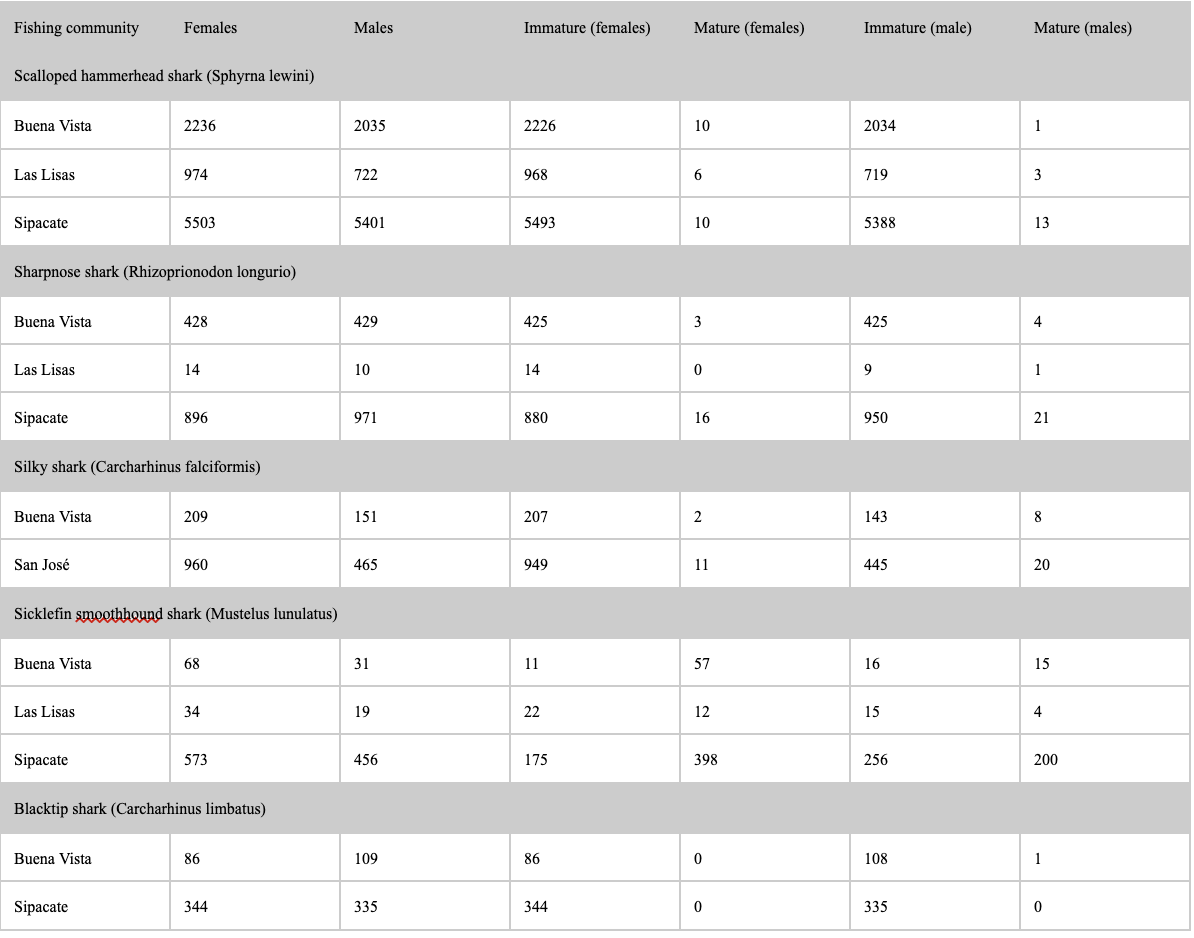
Nearly all recorded individuals (99.74%) were immature, with only 43 mature specimens (Table 2). A significant difference in sex ratio was detected among communities, driven primarily by a higher-than- expected number of females in Las Lisas (χ²=29.63, P <0.001). No significant difference in sex ratio was found between Buena Vista and Sipacate (χ²=2.27, P=0.13).
Table 1: Number of specimens (N=24,987), size range, mean size, standard deviation, and IUCN red list category for the species recorded in the monitoring landings of the Pacific coast of Guatemala (2017–2024).
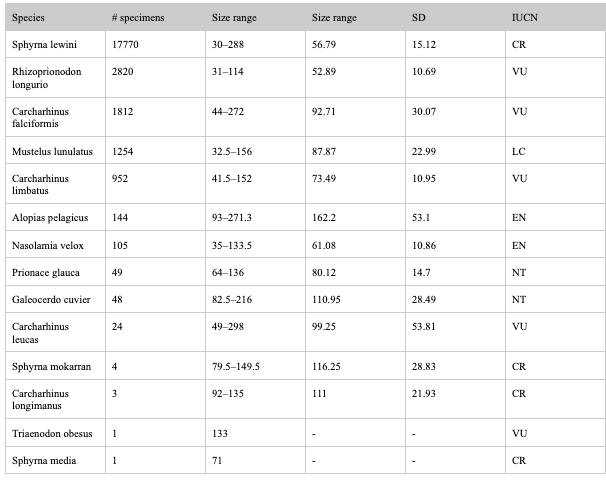
Table 2: Number of females and males by maturity stage for the main shark species across fishing communities. Data are presented only for the principal communities.
3.2.3. CPUE by fishing community (2022–2024)
CPUE exhibited distinct patterns among communities (H=41.13, P <0.0001). CPUE was similar in Buena Vista (4.23 ±6.14) and Sipacate (2.63 ±2.70), both higher than in Las Lisas (0.43 ±0.63). The effect size was large (η² =0.37), indicating substantial variation in shark catch rates; however, given that CPUE was derived from non- standardized, fishery-dependent data, these differences should be interpreted with caution.
3.2.4. Seasonal size variation by fishing community
Mean TL varied significantly across bimesters in Buena Vista (H=673.96, P <0.0001; η²=0.23), Las Lisas (H=172.80, P <0.0001; η²=0.11), and Sipacate (H=1520.29, P <0.0001; η²=0.16) with moderate to large effect sizes. A gradual size increase was observed from the third bimester through the sixth in Buena Vista and Sipacate, and from the fourth bimester through the sixth in Las Lisas (Table 3). These patterns suggest that seasonality influences the size composition of shark
catches. However, observed patterns may also reflect variation in fishing effort, gear characteristics, and spatial targeting.
3.2.5. Seasonal and annual CPUE by fishing community (2022–2024)
Although CPUE tended to be higher during the third and fourth bimesters in the three fishing communities, the high variability prevented these differences from reaching statistical significance relative to most other bimesters. For instance, CPUE varied in Buena Vista (H=15.01, P <0.03; η² =0.33) and Las Lisas (H=19.54, P <0.01; η² =0.48), peaking in the fourth bimester and lowest in the first. Also, seasonal variation was also observed in Sipacate (H=25.55, P <0.001; η² =0.68), with highest CPUE in the third and fourth bimesters, contrasting with the first and sixth (Table 4).
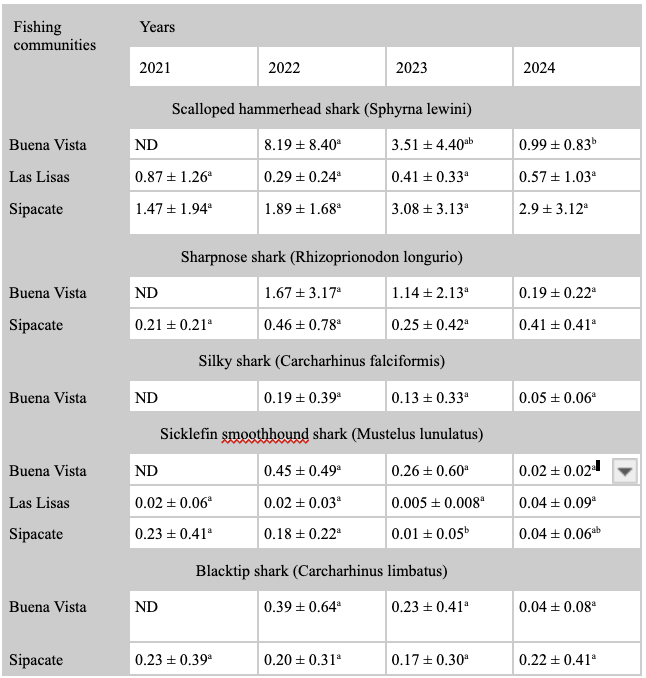
With the exception of Buena Vista, annual CPUE exhibited low fluctuations. CPUE in Buena Vista exhibited distinct interannual patterns during 2022–2024, with a peak in 2022 and a sharp decline in 2024 (H=9.26, P <0.01; η²
=0.22). No variations were observed across years (2021–2024) in Las Lisas (H=1.99, P=0.57) and Sipacate
(H=5.94, P=0.11) (Table 5).
3.3. Pacific sharpnose shark, Rhizoprionodon longurio
3.3.1. Size structure by fishing community
A total of 2189 Pacific sharpnose sharks with recorded size and sex were analyzed, comprising 1066 females and 1123 males. Females (52.11 ±9.95 cm TL) were significantly smaller than males (53.28±10.54 cm TL) (t=− 2.67, P <0.01; Cohen’s d=0.11). Significant differences in mean total length (TL) across fishing communities were found (H=17.84, P <0.001; η² =0.007) (. 2b). The largest individuals were recorded in Las Lisas (60.90 ±11.04 cm TL), while there were no significant differences between Buena Vista (52.51 ±9.42 cm TL) and Sipacate (52.69 ±10.60 cm TL) (P=0.29). Although statistically significant differences were detected, the small effect size suggests that these differences should be interpreted with caution.
Table 3: Mean total length (±SD) by bimester and fishing community for the main shark species landed in the Guatemalan Pacific. Sample size for each community is provided. Superscript letters indicate statistical similarities and differences in mean size between bimesters. ND: not enough data available for analysis
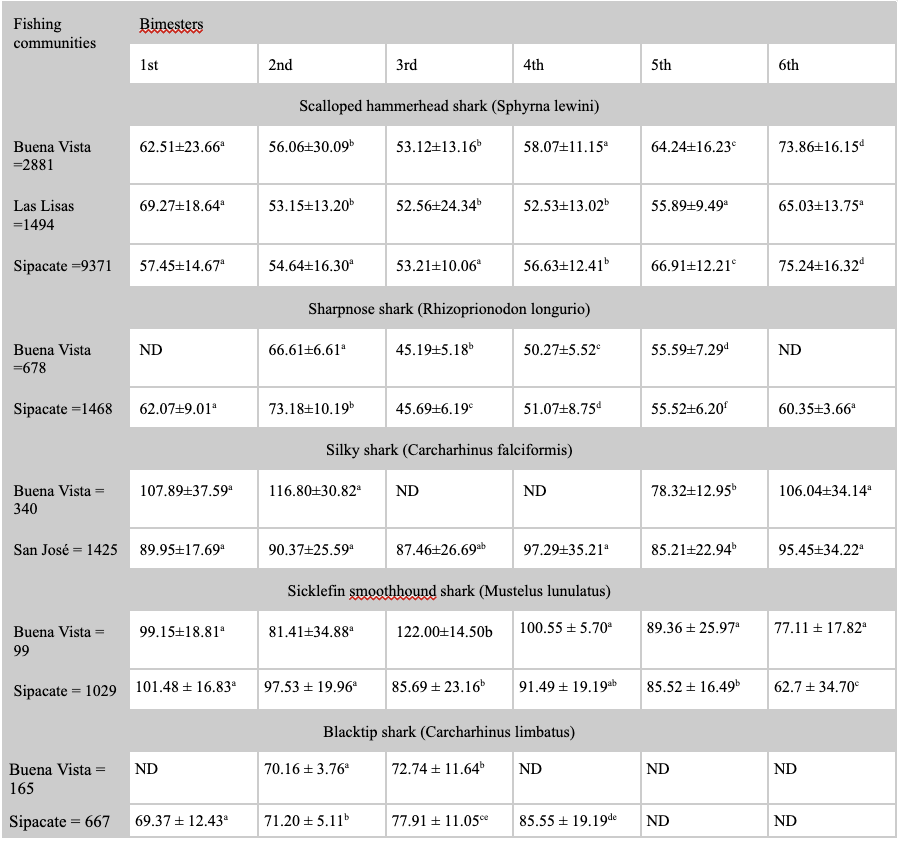
Table 4
Seasonal CPUE (±SD) by fishing community for the main shark species landed in the Guatemalan Pacific (2022–2024). Each community includes 36 CPUE observations. Superscript letters indicate statistical similarities and differences in CPUE between bimesters. ND: not enough data available for analysis.
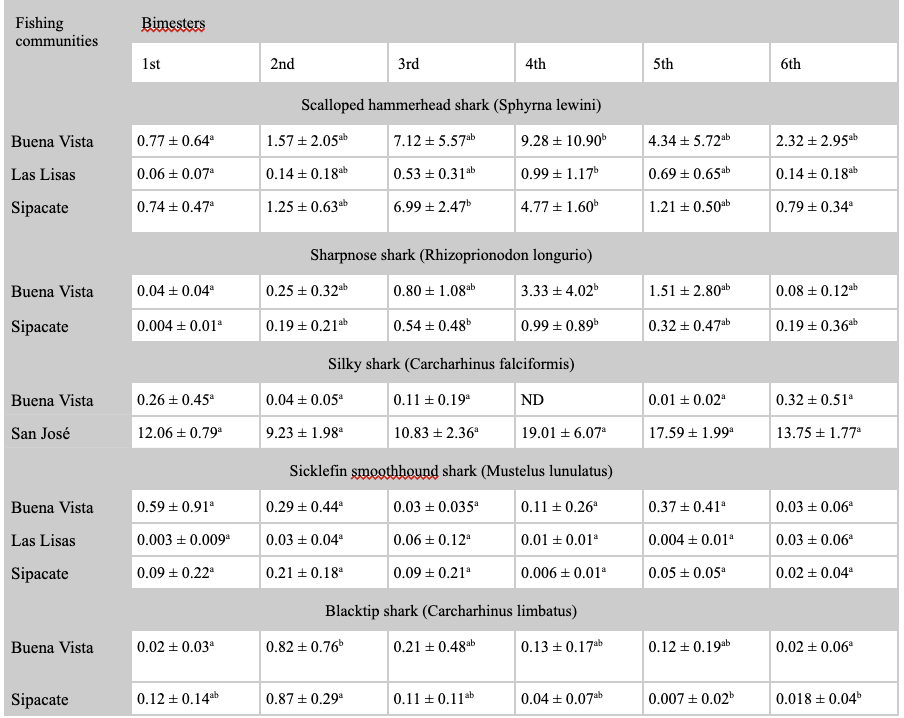
Table 5: Annual CPUE (±SD) by fishing community for the main shark species landed in the Guatemalan Pacific. Las Lisas and Sipacate each include 48 CPUE observations, whereas Buena Vista includes 36. Superscript letters indicate statistical similarities and differences in catch rates between years. ND: not enough data available for analysis.
3.3.2. Sex ratio and maturity status
The population was predominantly composed of immature individuals (97.99%), with only 44 mature specimens recorded (Table 2).
No significant differences in sex ratios were observed between the fishing communities (χ²=0.61, P=0.74).
3.3.3. CPUE by fishing community
During the 2022–2024 period, no distinct patterns in CPUE were observed between Buena Vista (1.00 ±2.23) and Sipacate (0.37 ±0.55)(Z=0.74, P=0.46).
3.3.4. Seasonal size variation by fishing community
The mean TL varied significantly across bimesters in Buena Vista (F=311.01, P <0.0001; Cohen’s f =0.83) and Sipacate (H=901.05, P <0.0001; η² =0.61), with a gradual increase in size observed from the third through the sixth bimester. In Sipacate, this increasing trend continued into the first and second bimesters (Table 3).
3.3.5. Seasonal and annual CPUE by fishing community (2022–2024)
CPUE exhibited distinct patterns between bimesters in Buena Vista (H=15.72, P <0.01; η² =0.36) and Sipacate (H=17.16, P <0.01; η² = 0.41). A trend was observed, with the highest CPUE occurring during the third and fourth bimesters; however, due to high variability, these differences were not statistically significant when compared to most other bimesters (Table 4). Annual CPUE exhibited low fluctuations. No distinct annual patterns were observed in Buena Vista (H=2.02, P=0.36) between 2022 and 2024. Similarly, in Sipacate, distinct patterns were not observed during the 2021–2024 period (H=1.67, P=0.64) (Table 5).
3.4. Silky shark, Carcharhinus falciformis
3.4.1. Size structure by fishing community
From the total silky shark records with length and sex data (N=1805), 1177 were females and 628 males. Females (90.68
±27.19 cm TL) were smaller than males (96.46 ±34.35 cm TL)(Z=− 2.39, P <0.03) (Fig. 2c). There were also differences in total length between fishing communities (Z=3.78, P <0.001), with individuals from Buena Vista (98.31 ±32.93 cm TL) being larger than those from San José (91.29 ±28.79 cm TL). However, in both cases the effect sizes were very small (r=− 0.05 and r=0.09, respectively), indicating that these differences should be interpreted with caution.
3.4.2. Sex ratio and maturity status
The majority of silky shark specimens recorded (98.38%) were immature, with only 42 individuals classified as mature (Table 2). There were significant differences in the sex ratio between fishing communities, driven by a higher-than-expected number of males in Buena Vista and a higher-than-expected number of females in San José (χ²=11.03, P <0.001).
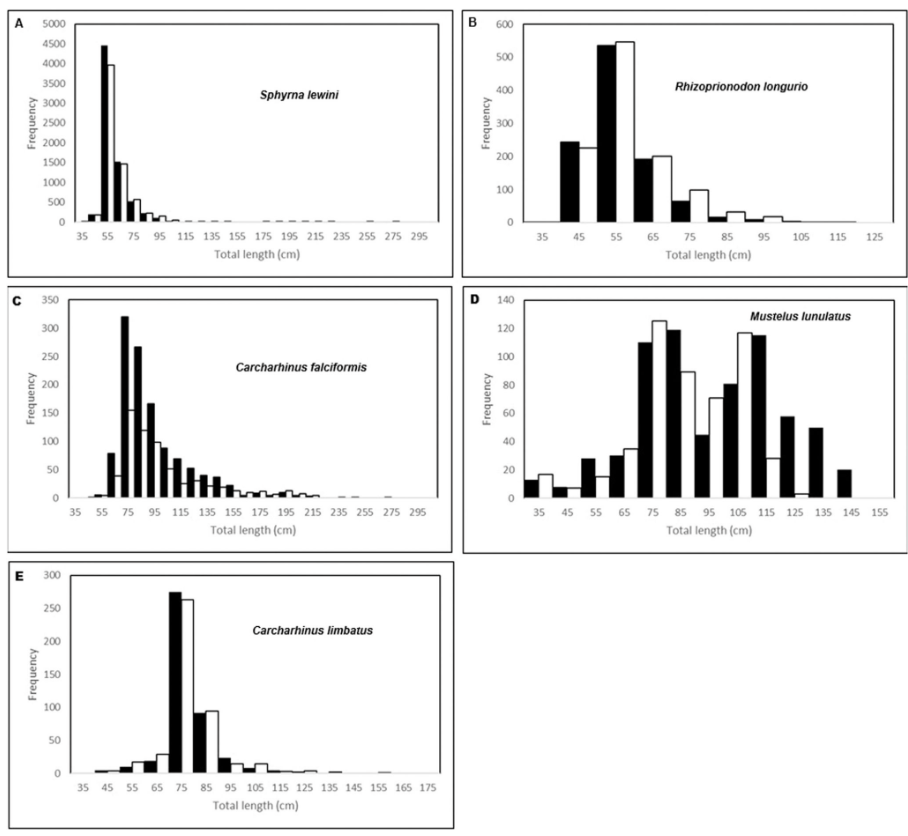
Fig. 2. Size distribution of A) Sphyrna lewini, B) Rhizoprionodon longurio, C) Carcharhinus falciformis, D) Mustelus lunulatus, and E) Carcharhinus limbatus. Females: black bars; males: white bars. The X and Y axes scales are different for each species.
3.4.3. CPUE by fishing community
A direct comparison of CPUE between Buena Vista and San José was not possible due to the differing sampling periods. In San José, landings were sampled from June 2020 to May 2021, reporting a CPUE of 13.75±4.29 sharks/boat. In contrast, sampling in Buena Vista from 2022 to 2024 yielded a much lower CPUE of 0.12 ±0.29 sharks/boat.
3.4.4. Seasonal size variation by fishing community
The smallest mean TL was recorded during the fifth bimester; however, no consistent trend in size was observed across the bimesters. In Buena Vista, there were significant differences in mean total length between bimesters (H=84.96, P <0.0001) with a large effect size (η²=0.23). In San José, significant differences were also found in mean length between bimesters (H=29.29, P <0.0001) although the effect size was very small (η²=0.02) (Table 3).
3.4.5. Seasonal and annual CPUE by fishing community
There were no distinct patterns in CPUE between bimesters in Buena Vista (2022–2024) (H=7.59, P=0.18) and San Jos´
e (June 2020-May 2021) (H=8.89, P=0.11) (Table 4). In Buena Vista, CPUE did not exhibit distinct interannual patterns between 2022 and 2024 (H=0.86, P=0.65) (Table 5).
3.5. Sicklefin smoothhound shark, Mustelus lunulatus
3.5.1. Size structure by fishing community
From the total records with size and sex data (N=1184), 677 individuals were females and 507 were males. Females (92.19 ±24.89 cm TL) were significantly larger than males (81.75 ±18.14 cm TL)(Z=7.85, P <0.0001) with a small to moderate effect size (r=0.23)(Fig. 2d). Significant differences in mean total length were also found
between fishing communities (H=42.55, P <0.0001), although the effect size was small (η²=0.03). The largest individuals were recorded in Buena Vista (95.84 ±26.53 cm TL), followed by Sipacate (87.90±21.89 cm TL), with the smallest sharks recorded in Las Lisas (70.88±24.07 cm TL).
3.5.2. Sex ratio and maturity status
Of the 1181 individuals with maturity data, 59.81% were mature, including 467 females and 219 males (Table 2). There were significant differences in sex ratios among fishing communities, mainly due to a higher-than-expected number of females and fewer males in Buena Vista (χ²=7.34, P <0.05). The sex ratio in Las Lisas and Sipacate did not differ significantly from expected values (χ²=2.30, P=0.13). Maturity status also varied significantly between fishing communities (χ²=25.66, P <0.0001). A higher proportion of mature individuals was recorded in Buena Vista, while a lower proportion was observed in Las Lisas. Maturity proportions in Sipacate were consistent with expected values.
3.5.3. CPUE by fishing community (2022–2024)
CPUE exhibited distinct patterns among fishing communities (H=6.84, P <0.05) although the effect size was small (η²=0.05). The highest CPUE was reported in Buena Vista, which was different from the lower catch rate in Las Lisas. Sipacate reported an intermediate catch rate, which was not different from either of the other two communities.
3.5.4. Seasonal size variation by fishing community
In Buena Vista, significant differences in mean total length were observed between bimesters (H=33.12, P <0.0001) with a large effect size (η²=0.31). The largest individuals were recorded in the third bimester, which differed significantly from all other bimesters. Although differences were not statistically significant, a gradual size decline was evident from the third through the sixth bimester (Table 3). In Sipacate, mean total length also varied significantly between bimesters (H=93.89, P <0.0001) with a moderate effect size (η²=0.09). A gradual decrease in mean size was observed across the bimesters, with the highest value in the first and the lowest in the sixth bimester (Table 3).
3.5.5. Seasonal and annual CPUE by fishing community (2022–2024)
There were no distinct patterns in CPUE between bimesters in the three fishing communities (Buena Vista: H=2.69, P=0.75; Las Lisas: H=5.0, P=0.41; Sipacate: H=8.95, P=0.11) (Table 4). Also, no distinct interannual patterns were found in CPUE across the 2022–2024 period in Buena Vista (H=2.59, P=0.27) and Las Lisas (H=3.29, P=0.35). In contrast, distinct interannual patterns were observed in Sipacate (H=14.88, P <0.01) with a large effect size (η²=0.27). The catch rate in 2023 was lower than in 2021 and 2022 (Table 5).
3.6. Blacktip shark, Carcharhinus limbatus
3.6.1. Size structure by fishing community
A total of 888 blacktip sharks with size and sex information were recorded, comprising 441 females and 447 males. Mean total length was similar between sexes, with females measuring 73.76 ±10.21 cm TL and males 73.58 ±11.95 cm TL (t=0.24,P=0.81) (Fig. 2e). No significant differences in mean total length were detected between Buena Vista (74.64 ±13.56 cm TL) and Sipacate (73.34 ±10.22 cm TL) (U=64734.5, P=0.63).
3.6.2. Sex ratio and maturity status
Of the 888 individuals analyzed, 99.89% were classified as immature, with only one mature male recorded (Table 2). The sex ratio did not differ significantly between Buena Vista and Sipacate (χ²=2.61,P=0.10).
3.6.3. CPUE by fishing community (2022–2024)
CPUE were similar between fishing communities, with no distinct patterns detected (t=0.27, P=0.78). Buena Vista reported a mean catch rate of 0.22 ±0.45, while Sipacate reported 0.19 ±0.34.
3.6.4. Seasonal size variation by fishing community
In Buena Vista, mean total length differed significantly between the second and third bimesters (Z=− 5.45, P <0.0001), with a moderate to large effect size (r=− 0.42). In Sipacate, significant differences in mean total length were found among all analyzed bimesters (H=200.22, P <0.0001), except between the third and fourth bimesters. The effect size was very large (η² =0.71). A gradual increase in mean size was observed across the first four bimesters (Table 3).
3.6.5. Seasonal and annual CPUE by fishing community (2022–2024)
In Buena Vista, CPUE exhibited distinct patterns between bimesters (H=15.51, P <0.01). The highest catch rate occurred in the second bimester, which varied from the first and sixth bimesters. Similarly, distinct patterns in CPUE were observed between bimesters in Sipacate (H=21.27, P <0.001). As in Buena Vista, the second bimester had the highest CPUE, which was higher than the fifth and sixth bimesters (Table 4). In both cases, the effect sizes were large (η²=0.35 and η²=0.38, respectivelly). No distinct interannual patterns in CPUE were detected over the 2022–2024 period in Buena Vista (H=2.51, P=0.28) and over the 2021–2024 period in Sipacate (H=1.03, P=0.79) (Table 5).
4. Discussion
This study offers insights into the artisanal shark catches along the Pacific coast of Guatemala. Our findings reveal a concerning trend: a small number of species, primarily S. lewini, dominate the landings, with a significant proportion of the catch comprising early life stages. This pattern, combined with the high prevalence of threatened species, raises conservation concerns. These results indicate that the studied coastal areas function as habitats for the early life stages (i.e., neonates, young-of-the-year, and early juveniles) of several shark species and underscore the need for spatial management measures focused on coastal waters where fishing operations occur within 30 km of the shoreline, as well as temporal management measures during the third and fourth bimester periods (May-August), when catches of early life stages were most prevalent. Moreover, this study provides a baseline that can support the implementation of science-based management under the framework of Guatemala’s National Plan of Action for Sharks, Rays, and Chimeras (NPOA-Guatemala).
4.1. Dominance of five species and prevalence of early life stages
Shark catches in the Guatemalan Pacific are dominated by five species, S. lewini, R. longurio, C. falciformis, M. lunulatus, and C. limbatus, which together accounted for 98.5% of the total landings. Size structure analyses indicated that the majority of individuals captured across all species were early life stages. This pattern suggests the presence of candidate nursery habitats along the Guatemalan Pacific coast, consistent with previous findings for S. lewini (Sánchez-Jiménez et al., 2025). In particular, this study provides evidence of the repeated seasonal use of these habitats across years by early life stages of several species. These findings partially meet the criteria outlined by Heupel et al. (2007) for identifying shark nursery areas. Other criteria, including residency, cannot be confirmed without fishery-independent sampling or tagging studies.
The existence of communal shark nurseries has been widely documented in various regions, such as Bulls Bay in South Carolina, USA (Castro, 1993), Cleveland Bay in Australia (Simpfendorfer and Milward, 1993), and the inshore ecosystems of the Great Barrier Reef (Simpfendorfer et al., 2014). In light of this, future research should evaluate whether the coastal habitats of Guatemala meet all the criteria proposed by Heupel et al. (2007) to determine if there is a communal nursery in these coastal habitats.
Even if these areas do not fulfill all the criteria to be formally designated as communal nurseries, the consistent presence of early life stages indicates that these coastal zones function as habitats for those stages of multiple species. Consequently, fishing activities in these habitats pose a substantial risk to population replenishment, as the removal of early life stages may hinder recruitment and long-term recovery. Prioritizing the protection of these habitats should be a key component of future management strategies. Measures such as the establishment of Fish Replenishment Zones, proposed, for example, for the Las Lisas area (Mojica et al., 2021), represent promising tools to mitigate these risks. Based on the spatial and temporal patterns observed in this study, such measures could be evaluated for coastal waters where fishing operations occur within 30 km of the shoreline, particularly during the third and fourth bimester periods (May-August), when the occurrence of early life stages was highest.
The threat posed by fishing is heightened by the fact that artisanal fisheries operate year-round in the Guatemalan Pacific, with no seasonal closures or gear restrictions in place (Ávalos-Castillo and Santana-Morales, 2021). Recognizing this, the National Plan of Action for Sharks, Rays, and Chimeras (NPOA-Guatemala; MAGA, 2021) has identified the delineation of shark nursery habitats as a priority research objective to support the conservation of these species.
Previous studies have consistently highlighted the recurrent capture of early life stages of sharks in Guatemalan artisanal fisheries (Ruíz-Alvarado and Mijangos-López, 1999; Ávalos-Castillo and Santana-Morales, 2021; Sánchez-Jiménez et al., 2025), reinforcing the urgent need for science-based management interventions. The predominance of those stages in landings is a feature shared with other artisanal fisheries throughout the region. Similar patterns have been documented in the southern Gulf of Mexico (Pérez-Jiménez and Méndez-Loeza, 2015), the Gulf of California (Bizzarro et al., 2009), El Salvador (González-Leiva et al., 2017), and Costa Rica (López-Garro and Zanella, 2015), where S. lewini is also frequently encountered. This recurrence suggests a strong preference of early life stages for shallow coastal habitats, highlighting the transboundary nature of the issue and the need for coordinated regional management actions to ensure the sustainability of shark populations across the region.
4.2. Significant seasonal variation in size across bimesters
A seasonal pattern in size structure was observed among the dominant shark species, with a general trend of increasing total length from early or mid to later bimesters. This pattern likely reflects ontogenetic shifts in habitat use, consistent with the temporal presence of early life stages, from neonates to young-of-the-year individuals, within the coastal zones. The predictable presence of early life stages of S. lewini, R. longurio, C. limbatus, and C. falciformis over multiple years partially meet the criteria for identifying shark nursery areas. However, given that these results are derived from fishery-dependent data, observed patterns may also be influenced by temporal variation in fishing effort, gear characteristics, or spatial targeting. Accordingly, further research is needed to validate and confirm these trends.
Although Heupel et al. (2007) advocate for the use of fishery-independent data to robustly characterize nursery grounds, such datasets with sufficient temporal and spatial resolution are often lacking, particularly in data-poor regions (Froeschke et al., 2010), such as the Guatemalan Pacific. In this context, the implementation of Citizen Science programs provides a valuable alternative, offering extensive and consistent coverage of artisanal fishing activities across multiple communities and timeframes.
Our findings align with those of Õnate-González et al. (2017) and Cuevas-Gómez et al. (2020), who demonstrated that fishery-dependent data, when systematically collected, can serve as a reliable proxy for identifying potential nursery areas in coastal environments. This approach is particularly useful in regions where formal scientific monitoring programs are limited or absent, and it supports the growing recognition of participatory science as a tool for conservation-oriented
fisheries research.
4.3. Significant variation in CPUE between seasons and communities
CPUE exhibited variation patterns not only across bimesters but also among the different fishing communities. Multiple factors, including habitat extension, fishing effort, gear selectivity, and the non-standardized nature of the CPUE estimates, likely influence these spatial and temporal patterns. Notably, the community of Las Lisas recorded the lowest CPUE, which may be attributed to the predominant use of gillnets in contrast to Buena Vista and Sipacate, where longlines are more commonly employed. The sources of variability may introduce bias and limit the comparability of CPUE among fishing communities or sampling periods, particularly when monitoring coverage or fishing effort is not standardized. Nevertheless, when interpreted within the context of these limitations, fishery-dependent CPUE data can still provide useful information on relative patterns of shark occurrence, seasonal dynamics, and the composition of catches in the fishing communities, contributing valuable insights into fisheries where independent scientific surveys are unavailable.
Despite the observed variation patterns in CPUE, there are no evident differences in the broad oceanographic characteristics along the Guatemalan Pacific coast that could account for such disparities. According to Brenes et al. (1993), the Central American Pacific platform can be divided into two oceanographic regions based on the behavior of the thermocline, seafloor topography, continental shelf width, and the structure of thermohaline water masses. The study area belongs to the first of these regions, which extends from Champerico, Guatemala (near the Mexican border), to southeastern Nicaragua. This suggests that oceanographic uniformity prevails among the studied sites, reinforcing the likelihood that local factors, such as fishing practices, are responsible for the observed patterns in CPUE.
However, some geomorphological distinctions among the coastal zones may contribute to localized differences in shark abundance, although this hypothesis requires confirmation through future research. For instance, Sipacate possesses a broader shallow habitat, as indicated by the greater distance of the 20 m and 50 m isobaths from the shoreline compared to other sites (Ixquiac-Cabrera et al., 2009). This expanded habitat may provide more favorable conditions for the presence of early life stages, which could explain the higher overall shark catch observed in this community. In contrast, Buena Vista and San José, characterized by a narrower continental shelf and a nearby submarine canyon that plunges to depths exceeding 500m (Fig. 1), showed higher catches of C. falciformis and A. pelagicus. These bathymetric features may influence species composition by facilitating the access of certain pelagic species to coastal fishing grounds. These findings underscore the importance of considering both fishing practices and localized habitat characteristics in understanding catch variability and designing spatially explicit management strategies.
These factors may also influence sex ratio variations in landings for some species. Fishing gear selectivity may preferentially capture individuals of particular sizes or behaviors, which can indirectly influence the observed sex composition of landings when sexes differ in these traits (Heupel and Simpfendorfer, 2005). In addition, many shark species exhibit spatial or habitat segregation by sex, whereby males and females occupy different areas or habitats during specific life stages or seasons (Sims, 2006). Also, variation in monitoring coverage and fishing effort among fishing communities and sampling periods may further contribute to apparent sex ratio differences. Therefore, although sex ratio deviations observed in the catch provide useful descriptive information about fisheries interactions with shark populations, they should be interpreted with caution and not assumed to directly reflect underlying population structure without complementary fishery-independent data.
4.4. Eleven of the fourteen species are at risk
A relevant finding from this study is that 11 of the 14 shark species recorded (78.5%) are classified in threatened categories by the IUCN Red List. These include S. lewini (Critically Endangered), R. longurio, C. falciformis, and C. limbatus (all Vulnerable). The frequent capture of these species, several of which are also listed in Appendix II of CITES, underscores a conservation concern and highlights the need for management strategies. However, given the relatively low species richness recorded in this study, this proportion should be interpreted with caution, as proportional estimates may be inflated when based on a limited number of species. Even so, the high representation of threatened species in landings remains notable when compared to broader regional and global assessments. For comparison, Dulvy et al. (2021) reported that 31.2% of shark species worldwide are threatened, while Talwar et al. (2022) found 40.2% in the western Central Atlantic, and Sherman et al. (2023) reported 53.1–57.8% for sharks associated with coral reefs.
The high percentage of threatened species on the Pacific coast of Guatemala is partially explained by the dominance of large-bodied, circumglobally distributed species in the catch. Larger species (total length >200 cm) tend to have slower growth rates, later maturity, and lower reproductive output, making them more susceptible to overfishing and slower to recover from population declines (Dulvy et al., 2021). Ferretti et al. (2008), (2010) similarly demonstrated that even low fishing pressure can cause rapid declines in large shark populations.
In contrast, only three of the species recorded in this study, R. longurio, M. lunulatus, and N. velox, are endemic to the Eastern Pacific, and only one (S. media) has a bi-oceanic distribution across the Eastern Pacific and Western Atlantic. Among these, only M. lunulatus is listed as Least Concern. Notably, all these species are small to medium-bodied (total length <200 cm) and exhibit higher intrinsic productivity (Walker, 1998). However, their restriction to shallow continental shelf habitats makes them highly accessible to artisanal fisheries, further increasing their risk despite their higher reproductive potential.
Beyond species-specific traits, the observed threat levels are also driven by broader anthropogenic pressures. Campana et al. (2016) identified four main drivers of population decline in elasmobranchs: intrinsic biological vulnerability, overfishing, habitat destruction, and pollution. Among these, overfishing remains the dominant threat globally. Dulvy et al. (2021) found that 67.3% of all endangered chondrichthyan species are affected by overfishing, often in combination with other stressors such as habitat degradation (impacting 31.2% of threatened species), climate change (10.2%), and pollution (6.9%). These multiple, overlapping pressures underscore the complex conservation challenges facing sharks in coastal ecosystems, particularly in regions with intensive artisanal fisheries, such as the Guatemalan Pacific.
4.5. Implications for management and conservation
The high prevalence of early life stages (predominantly individuals <100 cm TL), dominance of threatened species, and seasonal patterns in catch composition collectively indicate intense fishing pressure on vulnerable life stages of sharks along the Guatemalan Pacific coast. Continued exploitation under these conditions may compromise population recruitment and increase the risk of local depletions. These findings underscore the need to evaluate targeted conservation measures, including temporal closures during the third and fourth bimester periods (May-August), when the occurrence of early life stages was highest, as well as spatial protection measures in coastal waters where fishing operations occur within 30 km of the shoreline. Combined with community-based co-management strategies, such measures could help reduce mortality of early life stages and contribute to the long-term sustainability of shark populations. Additionally, future studies incorporating fishery-independent surveys, habitat-use assessments, and georeferenced fishing information will be necessary to refine the spatial extent and timing of these measures.
Currently, artisanal shark fisheries in the Guatemalan Pacific operate without species-specific management regulations. Sharks are generally landed as a component of multispecies fisheries, and as such, they have not been the focus of dedicated management efforts. Nevertheless, the findings from this study, as well as prior research, highlight the presence of potentially important habitats in these coastal areas, which are susceptible to cumulative threats from multiple human activities.
Knip et al. (2010) identified three primary anthropogenic pressures on nearshore marine habitats due to their proximity to human populations: (1) habitat degradation resulting from coastal development, (2) pollution via terrestrial runoff, and (3) exploitation through fisheries. In many coastal areas, habitats coincide with important fishing zones for local communities. This overlap is particularly concerning due to the non-selective nature of the gear commonly used in artisanal fisheries, which leads to the incidental capture of sharks in their early life stages (Castillo-G´ eniz et al., 1998), a pattern also documented in Guatemala.
In addition to artisanal fishing, industrial shrimp trawling poses a risk to nearshore habitats. Recent evidence from Sánchez-Jiménez et al. (2023) reported the presence of early life stages of sharks in trawl bycatch, suggesting a direct threat to these populations. Furthermore, trawling can indirectly impact sharks by degrading benthic habitats that are essential for early life stages development. These combined pressures underscore the need to evaluate the extent and impact of fishing and habitat disturbance on coastal shark populations and to incorporate these findings into national and regional management frameworks. Overall, establishing protective measures for key coastal habitats, particularly those used by early life stages, should be prioritized. Such actions should be embedded within a broader strategy that integrates ecological data, local knowledge, and participatory governance to strengthen conservation outcomes and enhance the resilience of shark populations in the Guatemalan Pacific.
4.6. Study limitations
Several limitations should be considered when interpreting the results of this study. First, all analyses were based on fishery-dependent monitoring data, which reflect patterns in landings rather than direct estimates of shark abundance or habitat use. Consequently, the CPUE values presented here should be interpreted as relative indices of catch rates and not as standardized measures of population abundance. Second, the interpretation of size structure, sex ratios, and maturity composition may be affected by gear selectivity and sampling biases inherent to fishery-dependent datasets. Therefore, observed differences in sex ratios or size distributions should not be assumed to directly represent underlying population structure without validation through fishery-independent surveys.
Third, although the recurrent capture of neonates, young-of-the-year, and juvenile sharks suggests that the studied coastal habitats are important for the early life stages of several species, the present data do not allow confirmation of nursery habitat function under the criteria proposed by Heupel et al. (2007). Demonstrating residency, site fidelity, and repeated habitat use requires approaches using fishery-independent monitoring programs.
Finally, multiple statistical comparisons were conducted across species, communities, seasons, and years. Although effect sizes were incorporated and interpretation was focused on consistent patterns rather than solely on statistical significance formal corrections for multiple testing were not applied. Consequently, statistically significant results, particularly those associated with small effect sizes, should be interpreted cautiously. Despite these limitations, the long-term temporal coverage, large sample size, and extensive participation of coastal communities provide valuable baseline information for understanding shark catches and supporting future management and conservation 9 initiatives in the Guatemalan Pacific.
CRediT authorship contribution statement
Elisa Areano: Writing – review & editing, Project administration,
Funding acquisition, Conceptualization. Julio Sánchez-Jiménez:
Writing – review & editing, Methodology, Investigation, Formal analysis,
Conceptualization. Maria de Belen Chacón-Paz: Writing – review & editing, Methodology, Investigation, Data curation, Conceptualization. Juan Carlos Pérez-Jiménez: Writing – original draft, Visualization, Validation, Formal analysis, Data curation, Conceptualization.
Ethics approval statement
This study did not involve any experiments on animals or human participants, and therefore ethics approval was not required.
Declaration of Competing Interest
The authors declare that they have no known competing financial interests or personal relationships that could have appeared to influence the work reported in this paper.
Acknowledgments
We thank the fishers of the artisanal fleet from Buena Vista, Las Lisas, and Sipacate. Special thanks to Fidel Hernández, Jessica Hernández, Edwin Segovia, Manuel Zelada, Hugo Martínez, and Franklin Léon for their participation in the Citizen Science program. Funding was provided by Rufford Foundation, PADI Foundation, Waitt Foundation, Shark Conservation Fund, Luis von Ahn Foundation, and Van Tienhoven Foundation.
Data availability
Data will be made available on request.
References
Ávalos-Castillo, C.G., Santana-Morales, 0, 2021. Characterization of the artisanal elasmobranch fisheries off the Pacific coast of Guatemala. Fish. Bull. 119, 3–9. https://doi.org/10.7755/FB.119.1.2.
Bizzarro, J.J., Smith, W.D., Márquez-Farías, J.F., Tyminski, J., Hueter, R.E., 2009.
Temporal variation in the Artisanal Elasmobranch Fishery of Sonora, Mexico. Fish. Res. 97, 103–117. https://doi.org/10.1016/j.fishres.2009.01.009.
Brenes, C.L., Leo´n, S., Guti´errez, A., Arroyo, G., 1993. Algunos aspectos Oceanogra´ficos
de la Plataforma Pacífica de Centro Ame´rica. Rev. GeofíS. 38, 141–158.
Castillo-Géniz, J.L., Márquez-Farías, J.F., Rodríguez de la Cruz, M.C., Cortés, E., Cid, del Prado, A., 1998. The Mexican artisanal shark fishery in the Gulf of Mexico: towards a regulated fishery. Mar. Freshw. Res. 49, 611–620. https://doi.org/10.1071/ MF97120.
Castro, J.I., 1993. The shark nursery of Bulls Bay, South Carolina, with a review of the shark nurseries of the southeastern coast of the United States. Environ. Biol. Fishes 38, 37–48. https://doi.org/10.1007/BF00842902.
Castro, J.I., 2011. The Sharks of North America. Oxford University Press, NY.
Clark, E., von, Schmidt, K., 1965. Sharks of the central gulf coast of Florida. Bull. Mar.
CONAP, PNUD. 2017. Humedales para la reducción del riesgo de desastres. Available at:
〈https://www.gt.undp.org/content/guatemala/es/home/presscenter/articles/2 017/02/02/humedales-para-la-reducci-n-del-riesgo-de-desastres.html〉.
Cuevas-Gómez, A.G., Pérez-Jiménez, J.C., Méndez-Loeza, I., Carrera-Fernández, M., Castillo-Geniz, J.L., 2020. Identification of a nursery area for the critically endangered hammerhead shark (Sphyrna lewini) amid intense fisheries in the southern Gulf of Mexico. J. Fish. Biol. 97 (4), 1087–1096. https://doi.org/10.1111/ jfb.14471.
Dulvy, N.K., Pacoureau, N., Rigby, C., Pollom, R., Jabado, R., Ebert, D., et al., 2021. Overfishing drives over one-third of all sharks and rays toward a global extinction crisis. Curr. Biol. 31 (21). https://doi.org/10.1016/j.cub.2021.08.062.
Ebert, D.A., Dando, M., Fowler, S., 2021. Sharks of the world. A Complete Guide.
Princeton University Press, New Jersey.
FAO. 2018. Diagnóstico del sector de la pesca y la acuicultura en Guatemala. Ciudad de Guatemala. 64 pp. Licencia: CC BY-NC-SA 3.0 IGO.
Ferretti, F., Myers, R.A., Serena, F., Lotze, H.K., 2008. Loss of Large Predatory Sharks from the Mediterranean Sea. Conserv. Biol. 22 (4), 952–964. https://doi.org/ 10.1111/j.1523-1739.2008.00938.x.
Ferretti, F., Worm, B., Britten, G.L., Heithaus, M.R., Lotze, H.K., 2010. Patterns and ecosystem consequences of shark declines in the ocean. Ecol. Lett. 13, 1055–1071. https://doi.org/10.1111/j.1461-0248.2010.01489.x.
Froeschke, J.T., Stunz, G.W., Sterba-Boatwright, B., Wildhaber, M.L., 2010. An empirical test of the “shark nursery area concept” in Texas bays using a long-term fisheries-independent data set. Aquat. Biol. 11, 65–76. https://doi.org/10.3354/ab00290.
Gonza´lez Leiva, J.A., Mor´an Villatoro, J.M., Chicas Batres, F.A., 2017. Pesca artesanal y madurez sexual del tiburo´n gris Carcharhinus falciformis, tiburo´n martillo Sphyrna lewini y raya la´tigo Hypanus longus en El Salvador. Cienc. Pesq. 25 (1), 63–73.
Hacohen-Domené, A., Polanco-Vásquez, F., Estupiñan-Montaño, C., Graham, R., 2020.
Description and characterization of the artisanal elasmobranch fishery on Guatemala’s Caribbean coast. PLoS. One 15 (1), e0227797. https://doi.org/ 10.1371/journal.pone.0227797.
Heupel, M.R., Carlson, J.K., Simpfendorfer, C.A., 2007. Review. Shark nursery areas: concepts, definition, characterization and assumptions. Mar. Ecol. Prog. Ser. 337, 287–297. https://doi.org/10.3354/meps337287.
Heupel, M.R., Simpfendorfer, C.A., 2005. Quantitative analysis of aggregation behavior in juvenile sharks. Mar. Biol. 147, 1239–1249. https://doi.org/10.1007/s00227-005-0004-7.
Ixquiac Cabrera M.J., Franco Arenales I., Tejeda Velásquez C.A., Sánchez Rodas M.R., Sikahall Prado J.A. 2009. Áreas de crianza del Pacífico de Guatemala: Herramienta para
el manejo y aprovechamiento sostenido del recurso tiburón. Proyecto Fodecyt 13-2006, 48 p. Cent. Estud. Mar Acuic., Univ. San Carlos Guatemala, Guatemala City, Guatemala.
Knip, D.M., Heupel, M.R., Simpfendorfer, C.A., 2010. Sharks in nearshore environments: models, importance, and consequences. Mar. Ecol. Prog. Ser. 402, 1–11. https://doi. org/10.3354/meps08498.
López-Garro, A., Zanella, I., 2015. Tiburones y rayas capturados por pesquerías artesanales con línea de fondo en el Golfo Dulce, Costa Rica. Rev. Biol. Trop. 63 (2), 183–198. https://doi.org/10.15517/rbt.v63i1.23102.
MAGA. 2021. Plan de acción nacional para la ordenación y conservación de tiburones, rayas y quimeras de Guatemala. Acuerdo Ministerial no. 280-2021, 2 p. Minist.
Agric. Ganad. Aliment., Guatemala City, Guatemala.
Mojica, A., Giró, A., Areano, E., Ávalos, C., Acevedo, M. F., & Sánchez, J. (2021). Propuesta de actualización para la Zona de Recuperación de Pesca del A´rea de Conservación Las Lisas - Revisión técnica del polígono propuesto en 2018 como Zona de Recuperación de Pesca dentro del polígono propuesto como A´rea Marina Protegida para el Área de Conservación Las Lisas. Proyecto: “Zona de Recuperación de Pesca del Área de Conservación Las Lisas: Bases para su establecimiento, gobernanza y lineamientos de manejo”. ICIAAD - PPD, Pixan'Ja, Fundación Mundo Azul, Iniciativa Arrecifes Saludables, p. 96.
On˜ate-Gonz´alez, E.C., Sosa-Nishizaki, O., Herzka, S.Z., Lowe, C.G., Lyons, K., Santana-Morales, O., Sepulveda, C., Guerrero-A´vila, C., García-Rodríguez, E., O’Sullivan, J.
B., 2017. Importance of Bahia Sebastian Vizcaino as a nursery area for white sharks (Carcharodon carcharias) in the Northeastern Pacific: a fishery dependent analysis. Fish. Res. 188, 125–137. https://doi.org/10.1016/j.fishres.2016.12.014.
Pérez-Jiménez, J.C., Méndez-Loeza, I., 2015. The small-scale shark fisheries in the southern Gulf of Mexico: understanding their heterogeneity to improve their management. Fish. Res. 172, 96–104. https://doi.org/10.1016/j. fishres.2015.07.004.
Ruíz Alvarado, C.L., Mijangos Lo´pez, N., 1999. Estudio sobre la pesquería del tiburón en
Guatemala (FAO Fish. Tech. Pap.). In: Shotton, R. (Ed.), Case studies of the management of elasmobranch fisheries, 378. FAO, Rome, pp. 174–198.
〈https://www.fao.org/3/X2097E/X2097E08.htm#ch6〉 (FAO Fish. Tech. Pap.).
S´anchez-Jim´enez, J., de los Rosales-Melgar, M., Areano, E., Hernández, A.C., Santana-Morales, O., P´erez-Jiménez, J.C., 2025. Nursery areas for a critically endangered hammerhead shark in the Guatemalan Pacific. J. Fish. Biol. 2025, 1–4. https://doi. org/10.1111/jfb.70023.
Sánchez-Jiménez, J., Santana-Morales, O., Zertuche, R., Areano, E., 2023. Elasmobranch bycatch of the shrimp trawl fishery along the Pacific coast of Guatemala. Fish. Bull. 121, 78–83. https://doi.org/10.7755/FB.121.3.2.
Sherman, C.S., Simpfendorfer, C.A., Pacoureau, N., Matsushiba, J.H., Yan, H.F., Walls, R. H., Dulvy, N.K., et al., 2023. Half a century of rising extinction risk of coral reef sharks and rays. Nat. Commun. 14, 15. https://doi.org/10.1038/s41467-022-35091-x.
Simpfendorfer, C.A., Milward, N.E., 1993. Utilization of a tropical bay as nursery area by sharks of the families Carcharhinidae and Sphyrnidae. Environ. Biol. Fishes 37, 337–345. https://doi.org/10.1007/BF00005200.
Sims, D.W., 2006. Differences in habitat selection and reproductive strategies of male and female sharks. In: Ruckstuhl, K., Neuhaus, P. (Eds.), Sexual Segregation in Vertebrates, 2006. Cambridge University Press, pp. 127–147. https://doi.org/ 10.1017/CBO9780511525629.009.
Talwar, B.S., Anderson, B., Avalos-Castillo, C.G., et al., 2022. Extinction risk, reconstructed catches and management of chondrichthyan fishes in the Western Central Atlantic Ocean. Fish Fish. 23 (5), 1150–1179. https://doi.org/10.1111/ faf.12675.
Walker, T.I., 1998. Can shark resources be harvested sustainably? A question revisited with a review of shark fisheries. Mar. Freshw. Res. 49, 553–572. https://doi.org/ 10.1071/MF98017.
Zar, J.H., 1996. Biostatistical Analysis, 3rd ed. Prentice-Hall, Nova Jersey, p. 662.