Guatemalan scientists, in collaboration with local communities, document sharks and other little-studied deep-sea species in the Guatemalan Caribbean.
At depths of more than 400 meters in the Guatemalan Caribbean lies a little-explored marine ecosystem:
These waters are home to sharks, rays, chimaeras, and other species adapted to deep-sea environments, many of which have been scarcely documented in the region.
For a decade, scientists and artisanal fishers from El Quetzalito, Izabal, have worked together to investigate the biodiversity of the deep waters of the Guatemalan Caribbean. The findings provide new information on little-studied marine species and highlight the ecological importance of this ecosystem.
Findings that place the Guatemalan Caribbean on the map of marine research:
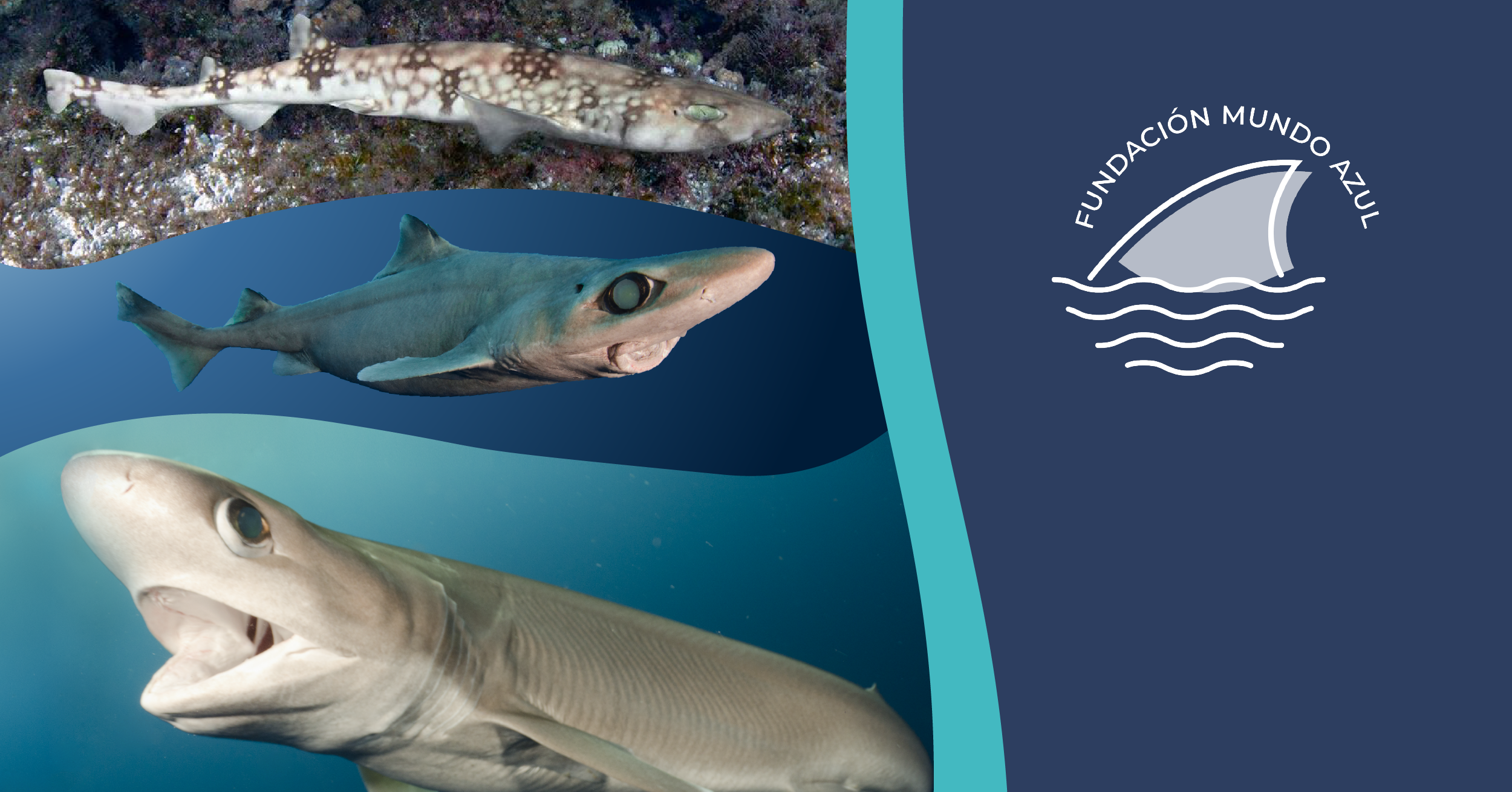
Between 2015 and 2025, researchers recorded 124 deep-sea species, including:
7 species of sharks
1 species of ray
1 species of chimaera
Many of these species inhabit depths greater than 400 meters, where sunlight does not penetrate and the pressure is extreme.
The most frequently recorded shark is endangered
The most frequently recorded species was the gulper shark (Centrophorus granulosus), listed as “Endangered” on the IUCN Red List (International Union for Conservation of Nature).
Throughout the monitoring period, researchers observed variations in the records and catches of this species. However, these changes may be influenced by several factors, including environmental conditions, fishing dynamics, and the inherent limitations of monitoring deep- sea ecosystems. Additionally, one of the most significant findings was the record of the bluntnose sixgill shark (Hexanchus griseus), a primitive shark that can exceed 4 meters in length.
Researchers also documented Neoharriotta carri, a species of chimaera popularly known as the “ghost fish," which belongs to a group of cartilaginous fishes that remains poorly documented in the region.
Where did all this take place?
The research was conducted near El Quetzalito, Punta de Manabique, and deep-sea areas associated with the Cayman Trench and the Motagua Fault, considered one of the deepest regions in the Caribbean.
Citizen science was key to the research
Artisanal fishers and members of the local community collaborated with marine researchers in monitoring catches and recording species. This joint effort generated information on little- studied deep-sea species and highlights the importance of collaboration between coastal communities and science for the study of marine ecosystems.
Conclusion
The deep waters of the Guatemalan Caribbean harbor a poorly studied marine biodiversity, with species that still represent significant gaps in scientific knowledge in the region.
While much of the world’s attention is focused on other oceans, Guatemala may be home to a marine biodiversity of great scientific importance for the Caribbean and Mesoamerica.